Avicenna J Dent Res. 17(3):154-159.
doi: 10.34172/ajdr.2187
Original Article
Comparative In Vitro Study of Antimicrobial Efficacy of Sodium Hypochlorite, Normal Saline, and Hekla Lava Tooth Powder as Root Canal Irrigants Against Enterococcus faecalis
Banu Jothi A Conceptualization, Formal analysis, Investigation, Methodology, Writing – original draft, 1 
Rajmohan M Validation, Writing – review & editing, 2, *
Savithri S Methodology, Resources, Writing – review & editing, 3
Prabu D Conceptualization, Supervision, Writing – original draft, Writing – review & editing, 4
Lubna Fathima Writing – review & editing, 5
Sindhu R Data curation, Writing – review & editing, 5
Dinesh Dhamodhar Visualization, Writing – review & editing, 2
Indira Nehru Writing – review & editing, 5
Hari Priya R Writing – review & editing, 1
Author information:
1Postgraduate, Public Health Dentistry, SRM Dental College, Bharathi Salai,Chennai, India
2Master of Dental Surgery, Reader, Department of Public Health Dentistry, SRM Dental College, Rampuram, Chennai, India
3Professor and Head, Department of Microbiology, SRM Dental College, Bharathi Salai, Chennai, India
4Master of Dental Surgery, Professor and Head, Department of Public Health Dentistry, SRM Dental College, Bharathi Salai, Chennai, India
5Master of Dental Surgery, Senior Lecturer, Department of Public Health Dentistry, SRM Dental College, Bharathi Salai, Chennai, India
Abstract
Background: Enterococcus faecalis is a bacterium commonly associated with persistent endodontic infections. Hekla Lava has healing properties that enhance its antibacterial effects, making it a potential alternative to traditional irrigants, such as sodium hypochlorite (NaOCl). E. faecalis is particularly resilient and can form biofilms, thus complicating treatment outcomes; therefore, exploring effective irrigants is crucial for improving root canal disinfection strategies. This research aimed to assess whether Hekla Lava tooth powder (HLTP) can provide sufficient antimicrobial efficacy to support successful endodontic treatments. It evaluated the antibacterial efficacy of NaOCl, normal saline (NS), and HLTP as a root canal irrigant against E. faecalis.
Methods: The in vitro study was conducted in an extracted non-carious human tooth. The treatment groups were treated with NaOCL (group A), NS (group B), and HLTP (group C) for the irrigation of the root canal for 5 minutes and 48 hours.
Results: The results of the study demonstrated significant differences in the antimicrobial efficacy of the three treatment groups at both time points. HLTP showed a decrease in colony-forming units from a mean initial count of 59.35±5.80 after 5 minutes to 40.47±3.81 after 48 hours, indicating that its use was better when compared to NS.
Conclusion: The findings reaffirm that the use of HLTP as an irrigant is preferable compared to NS due to its superior antimicrobial properties against E. faecalis. NS lacks substantial antimicrobial effects, making it less effective for disinfection in root canal procedures. This study highlights the potential of HLTP as a more effective alternative for improving treatment outcomes in endodontics, suggesting a shift toward herbal and natural solutions in dental care practices.
Keywords: Hekla Lava tooth powder, NaOCl, E. faecalis, Root canal irrigant, Antimicrobial efficacy
Copyright and License Information
© 2025 The Author(s); Published by Hamadan University of Medical Sciences.
This is an open-access article distributed under the terms of the Creative Commons Attribution License (
http://creativecommons.org/licenses/by/4.0), which permits unrestricted use, distribution, and reproduction in any medium provided the original work is properly cited.
Please cite this article as follows: Banu Jothi A, Rajmohan M, Savithri S, Prabu D, Lubna Fathima, Sindhu R, et al. Comparative in vitro study of antimicrobial efficacy of sodium hypochlorite, normal saline, and Hekla Lava tooth powder as root canal irrigants against Enterococcus faecalis. Avicenna J Dent Res. 2025;17(3):154-159. doi:10.34172/ajdr.2187
Background
Endodontics is a field that studies the structure and function of the pulp and periradicular tissues that surround a tooth’s root canals. Root canal therapy aims to clear the infected pulp and periradicular tissues while preventing infection (1). Microorganisms are the primary cause of pulpal and periapical irritation, resulting in root canal therapy (2). A key objective of root canal treatment is to decrease the number of microorganisms and disinfect the root canal system. To accomplish this aim, it is essential to perform mechanical preparation, irrigation, disinfection, and obturation of the root canal (3). The three primary stages of the root canal treatment are root canal preparation, chemomechanical debridement, and obturation. Chemomechanical debridement involves both instrumentation and irrigation. The purpose of instrumentation is to prepare the canal system for the application of locally used medications and the insertion of a root canal filling. Prior to using instruments and throughout the procedure, irrigation is employed as a pre-instrumentation step to remove contaminated necrotic tissue (1).
Enterococcus faecalis found in biofilms significantly contributes to the persistence of periapical lesions after root canal treatment (4). The microbial organisms and the host’s protective mechanisms clash and damage much of the periapical tissue, resulting in a severe reaction associated with apical periodontitis (5). This microorganism has shown the ability to thrive in conditions where nutrients are scarce and interactions with other bacteria are limited. Therefore, the effectiveness of root canal treatment relies on the removal of the microbial film, which can be difficult because the microorganism can invade dentinal tubules and the anatomical complexities of the root canal. To accomplish this goal, various irrigants were employed during the biomechanical preparation process (4). Since 1920, the most popularly used irrigant during endodontic therapy has been sodium hypochlorite (NaOCl), due to its tissue-dissolving and antimicrobial properties (6). Nonetheless, it is toxic due to its corrosive properties and unpleasant taste. Accordingly, it is important to use NaOCl with caution (7). To compensate for this drawback, Hekla Lava tooth powder (HLTP) is utilized as an irrigant to combat E. faecalis in the current study. Hekla Lava is a fine volcanic ash sourced from Mount Hekla that has never been used alone as an intracanal irrigant during in vitro endodontic therapy against E. faecalis. It is utilized in homeopathy for relieving tooth pain and dental abscesses, and dressing for the treatment of dry socket of the third molars. It can be used as an intracanal medicament in endodontic therapy, since it consists of large amounts of sulphur, fluoride, silica, lime, ferrous oxide, and magnesia (8). Due to its anti-inflammatory and anti-microbial properties, it can be employed as an irrigant for the debridement of E. faecalis in the root canal (9). Hekla Lava possesses healing properties that enhance its antibacterial effects, making it a possible option to traditional irrigants, such as NaOCl, against E. faecalis. Hence, this study aims to evaluate the efficacy of NaOCl, HLTP, and normal saline (NS) for the inhibition of E. faecalis during endodontic therapy.
Materials and Methods
The present in vitro study was conducted to investigate the antibacterial efficacy of NaOCl, NS, and HLTP against E. faecalis in June-August 2024. The procedure was performed on an extracted molar and premolar human tooth. Based on the study conducted by Rao et al, with a mean (SD) of 0.20 ( ± 0.41), a sample size of 39 was obtained using G power software (version 3.0), with the 95% confidence interval and a 5% margin of error (2). Standardized E. faecalis strains, nutrient-rich media, 5% NaOCl, 0.5 g of HLTP, and NS were included, while non-vital and grossly decayed teeth were excluded from the investigation.
The extracted teeth were debrided using a curette on the external root surfaces, and the surface was disinfected using 0.5% NaOCl for 24 hours. Root canals were prepared using standard endodontic techniques to create a uniform model for infection. Each specimen was inoculated with a standardized suspension of E. faecalis (106 CFU/mL). The inoculated teeth were incubated for 24 hours to allow bacterial colonization. The teeth were then subjected to treatment groups. Group A (n = 18) received irrigation with 2 mL of 5% NaOCl for 5 minutes, followed by agitation with a size 30 K-type file. The solutions were introduced into the root canal and left in place for 5 minutes. Group B (n = 4) received irrigation with NS for 5 minutes, and Group C (n = 17) received HLTP mixed with saline for the irrigation of the root canal for 5 minutes. After treatment, the samples were taken from each root canal to assess bacterial viability. The number of viable bacteria was quantified using a plate-count method on MacConkey agar plates. The cultures were incubated for 24 hours at 37°C before counting colony-forming units (CFUs).
Statistical analysis was performed using SPSS software, version 25. Descriptive statistics were used to find the mean distribution of the data. A normality test was conducted using the Shapiro-Wilk test. The analysis of variance (ANOVA) test was used since the data were normally distributed. In addition, a Bonferroni post-hoc test was performed after the significance of the ANOVA test, and P-value < 0.05 was considered statistically significant.
Results
The results of this study confirmed the efficacy of NaOCL, HLTP, and NS for the inhibition of E. faecalis during endodontic therapy. Group A (NaOCl) showed CFUs of E. faecalis at 5 minutes, which decreased to 0 after 48 hours.Figure 1A shows bacterial colonies estimated after irrigating with NaOCl within 5 minutes and 48 hours.
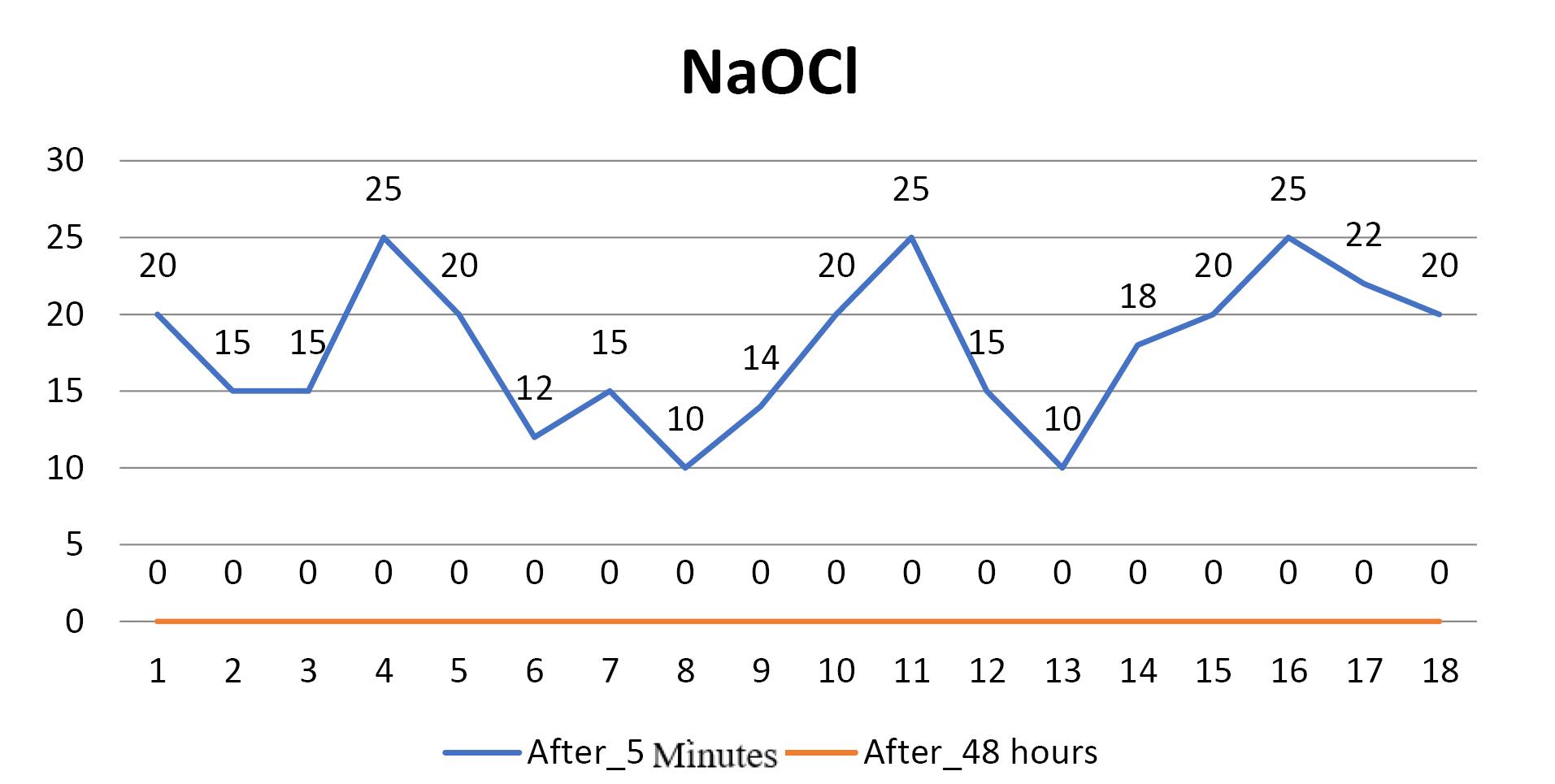
Figure 1.
A Graph Showing Bacterial Colonies Estimated After Irrigating With NaOCl Within 5 Minutes and 48 Hours in 18 Test Samples. Note. NaOCl: Sodium hypochlorite
.
A Graph Showing Bacterial Colonies Estimated After Irrigating With NaOCl Within 5 Minutes and 48 Hours in 18 Test Samples. Note. NaOCl: Sodium hypochlorite
Group B NS displayed the highest mean CFU of E. faecalis counts at both time points, indicating less efficacy in reducing bacterial load compared to the other treatments. Figure 2A depicts bacterial colonies estimated after irrigating with NS within 5 minutes and 48 hours.
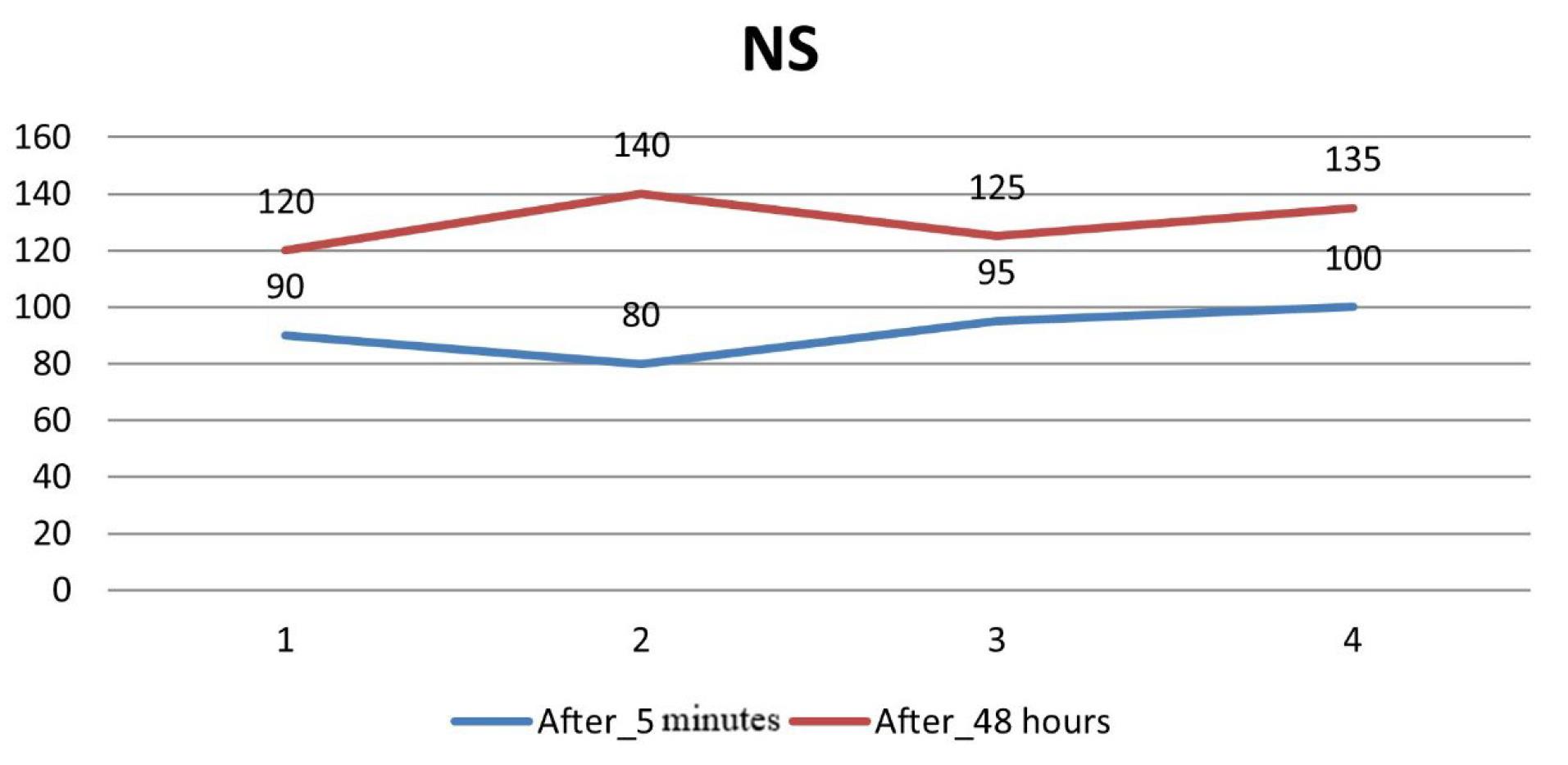
Figure 2.
A Graph Displaying Bacterial Colonies Estimated After Irrigating With Normal Saline Within 5 Minutes and 48 Hours in 4 Test Samples
.
A Graph Displaying Bacterial Colonies Estimated After Irrigating With Normal Saline Within 5 Minutes and 48 Hours in 4 Test Samples
Group C (HLTP) demonstrated a decrease in CFUs of E. faecalis from an initial count of 59.35 after 5 minutes to 40.47 after 48 hours, representing some levels of antibacterial activity against E. faecalis over time, but less when compared to NaOCl (Table 1).Figure 3A illustrates bacterial colonies estimated after irrigating with HLTP within 5 minutes and after 48 hours.
Table 1.
Mean Distribution of the Colony-Forming Units for NaOCl, Normal Saline, and Hekla Lava Teeth Powder at 5 Minutes and 48 Hours
|
Groups
|
|
Number
|
Mean
|
Std. Deviation
|
Std. Error
|
95% CI
|
|
Lower Bound
|
Upper Bound
|
| Group A |
After 5 minutes |
18 |
17.83 |
4.84 |
1.14 |
15.42 |
20.24 |
| After 48 hours |
0.00 |
0.00 |
0.00 |
0.00 |
0.00 |
| Group B |
After 5 minutes |
4 |
91.25 |
8.54 |
4.27 |
77.66 |
104.84 |
| After 48 hours |
130.0 |
9.13 |
4.56 |
115.47 |
144.53 |
| Group C |
After 5 minutes |
17 |
59.35 |
5.80 |
1.40 |
56.37 |
62.33 |
| After 48 hours |
40.47 |
3.81 |
0.92 |
38.51 |
42.43 |
Note. Std. deviation; Standard deviation; Std. error: Standard error; Group A: NaOCl, Group B: Normal saline; Group C: Hekla Lava Teeth Powder; CI: Confidence interval; NaOCl: Sodium hypochlorite.
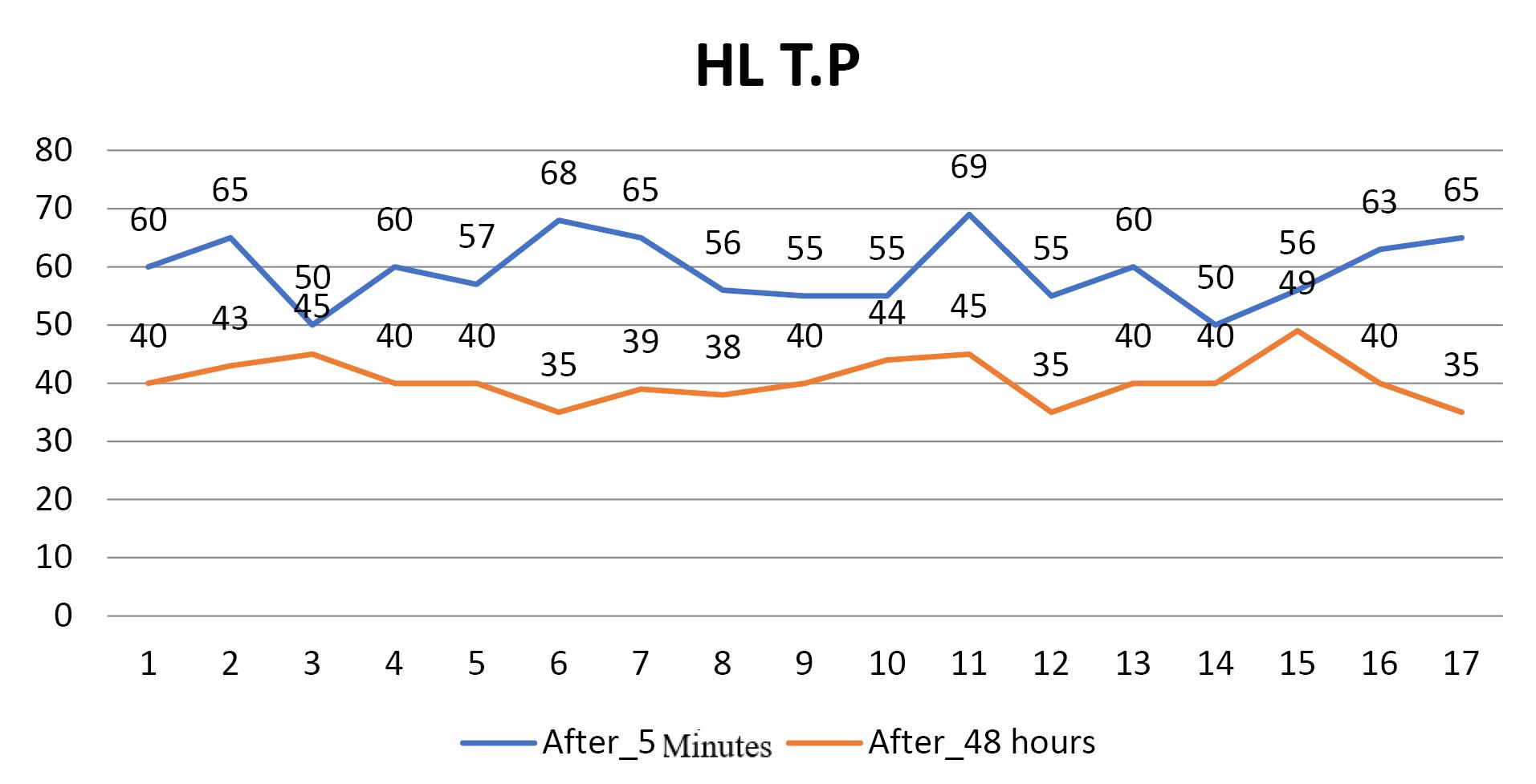
Figure 3.
A Graph Illustrating Bacterial Colonies Estimated After Irrigating With HLTP Within 5 Minutes and After 48 Hours in 17 Test Samples. Note. HLTP: Hekla Lava Tooth Powder
.
A Graph Illustrating Bacterial Colonies Estimated After Irrigating With HLTP Within 5 Minutes and After 48 Hours in 17 Test Samples. Note. HLTP: Hekla Lava Tooth Powder
The high F-values and low P values indicated that at both 5 minutes and 48 hours, at least one treatment significantly differed from the others in terms of its antibacterial effectiveness against E. faecalis (Table 2).
Table 2.
Analysis of Variance Showing Comparison Among Three Irrigants Assessed at Two Different Durations
|
|
|
Sum of Squares
|
df.
|
F
|
Sig.
|
| After 5 minutes |
Between groups |
25250.560 |
2 |
393.470 |
< 0.001*** |
| Within groups |
1155.132 |
36 |
| Total |
26405.692 |
38 |
| After 48 hours |
Between groups |
58026.739 |
2 |
2165.916 |
< 0.001*** |
| Within groups |
482.235 |
36 |
| Total |
58508.974 |
38 |
Note. Df: Degree of freedom; Sig.: Level of significance. ***P< 0.001 is considered highly statistically significant.
Based on the results, both time points showed significant differences in efficacy among the treatments tested in this study. After both 5 minutes and 48 hours, NaOCl consistently demonstrated the highest efficacy in reducing CFUs, followed by HLTP. Conversely, NS displayed the least effectiveness compared to the other treatments across both time points. These findings suggest that NaOCl was probably the most effective option for reducing E. faecalis in the current study, with implications for its use in clinical settings (Table 3).Figure 4A compares the effectiveness of three different irrigants within 5 minutes of irrigation and after 48 hours.
Table 3.
Bonferroni Post-hoc Multiple Comparisons Between Bacterial Colonies Estimated at Two Levels Among Three Irrigant Groups
|
Dependent Variable
|
Groups
|
Mean Difference (I-J)
|
SE
|
Sig.
|
95% Confidence Interval
|
|
Lower Bound
|
Upper Bound
|
| After 5 minutes |
Group A vs. Group B |
-73.41667* |
3.13119 |
< .001*** |
-81.2792 |
-65.5541 |
| Group A vs. Group C |
-41.51961* |
1.91575 |
< .001*** |
-46.3301 |
-36.7091 |
| Group B vs. Group C |
31.89706* |
3.14789 |
< .001*** |
23.9926 |
39.8015 |
| After 48 hours |
Group A vs. Group B |
-130.00000* |
2.02313 |
< .001*** |
-135.0802 |
-124.9198 |
| Group A vs. Group C |
-40.47059* |
1.23780 |
< .001*** |
-43.5788 |
-37.3624 |
| Group B vs. Group C |
89.52941* |
2.03392 |
< .001*** |
84.4222 |
94.6367 |
Note. SE: Standard error; Sig.: Level of significance; ANOVA: Analysis of variance; Post-hoc ANOVA–Bonferroni corrections; ***P < 0.001 is considered highly statistically significant.
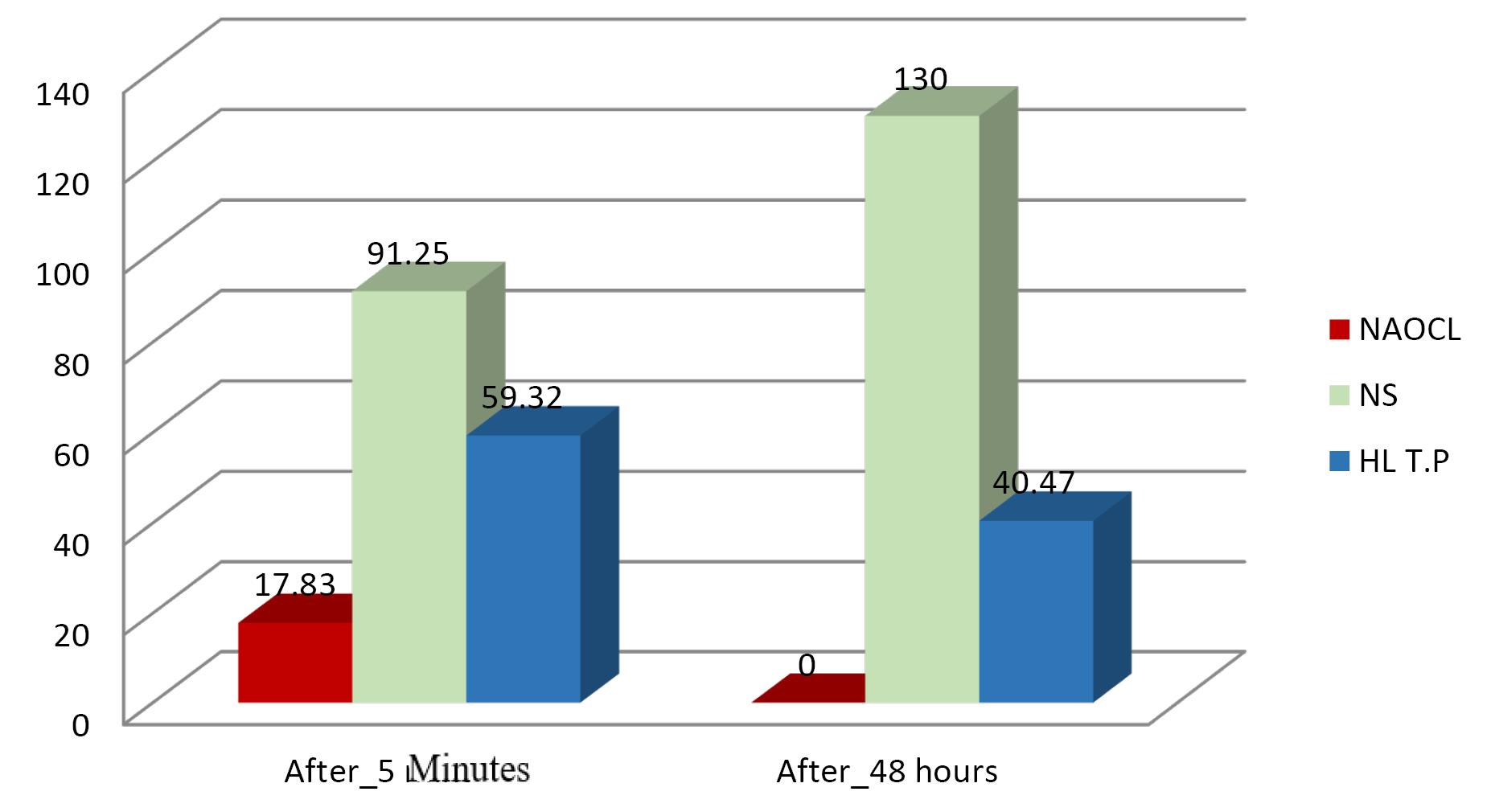
Figure 4.
A Bar Chart Depicting Comparison Between Effectiveness of Three Different Irrigants Within 5 Minutes of Irrigation and After 48 Hours. Note. HLTP: Hekla Lava Tooth Powder; NaOCl: Sodium hypochlorite
.
A Bar Chart Depicting Comparison Between Effectiveness of Three Different Irrigants Within 5 Minutes of Irrigation and After 48 Hours. Note. HLTP: Hekla Lava Tooth Powder; NaOCl: Sodium hypochlorite
Discussion
The results of this study revealed significant differences in the antibacterial efficacy of NaOCl, NS, and HLTP against E. faecalis at both 5 minutes and 48 hours. The NS group exhibited the highest mean CFU counts at both time points, indicating its inferior efficacy in reducing E. faecalis load compared to the other treatment groups. This is consistent with the findings of previous studies by Aviv et al and Zand et al, confirming that saline is less effective than more potent antibacterial agents (e.g., NaOCl and chlorhexidine) in eliminating E. faecalis from infected root canals (10,11).
In the current study, NaOCl demonstrated a remarkable reduction in CFUs, achieving a complete elimination by 48 hours, which is in line with its established reputation as a highly effective root canal irrigant. Research has consistently shown that NaOCl is superior in its antimicrobial activity against E. faecalis, with studies reporting significant reductions in bacterial counts immediately after application (12).The findings of this study reaffirm that NaOCl can effectively eradicate E. faecalis, making it a preferred choice in endodontic treatments. Nonetheless, it is crucial to utilize effective aseptic techniques alongside a larger apical preparation size (13).
In contrast, HLTP represented a decrease in CFUs from an initial count of 59.35 after 5 minutes to 40.47 after 48 hours, highlighting some antibacterial activity but less effectiveness compared to NaOCl. While HLTP has been noted for its antimicrobial properties, its efficacy appears to be lower than that of traditional irrigants, including NaOCl (14).Contrarily, Das and Nasim found that HLTP depicts a notable area of inhibition against E. faecalis and Streptococcus mutans when tested in vitro as an intracanal medicament (15).
The high F-values and low P values obtained from the ANOVA analysis confirmed that at both time points, there were statistically significant differences among the treatment groups regarding their antibacterial effectiveness against E. faecalis. Such a statistical significance underscores the importance of selecting appropriate irrigants for endodontic procedures to ensure optimal disinfection of the root canal system. Overall, these findings revealed that while NaOCl remains the most effective option, HLTP was superior in its efficacy for reducing E. faecalis counts when compared to NS in this study, which conforms to the findings of Meghna Nag et al, indicating that NaOCl with chlorhexidine has higher efficacy against E. faecalis (16). E. faecalis can enter the root canal system during treatment, between appointments, or even after the treatment has been completed. Therefore, it is crucial to take into account treatment plans designed to eradicate or prevent E. faecalis infections during each of these stages (17). Research examining E. faecalis presence in root-filled teeth with periradicular lesions showed a prevalence between 24% and 77% (18). In addition, NaOCl combined with ethylenediaminetetraacetic acid is also used as an irrigant for the removal of the smear layer (19). There are numerous alternative dental and oral products available over the counter (20). The safety of alternative treatments, such as HLTP, has been well documented for use in bleeding gums and tooth pain (21). The implications for clinical practice are clear, and practitioners can prioritize the use of antimicrobial agents, such as HLTP, for the management of endodontic infections while considering the caustic adverse effects of NaOCl.
The antibacterial potential of HLTP holds promise in addressing oral infections, particularly those involving E. faecalis, a persistent pathogen in root canal infections. While the study highlights its effectiveness, further investigation is required to optimize its clinical application. Modifications in concentration, exposure time, and compositional enhancement could potentially improve its antibacterial efficacy. Studies have demonstrated that increasing the contact time and concentration of herbal and mineral-based antimicrobial agents enhances bacterial inhibition (22).
Another crucial aspect that remains underexplored is the ability of Hekla Lava to disrupt biofilm formation by E. faecalis. Biofilms serve as a protective matrix, allowing bacteria to withstand antimicrobial agents and host immune responses (23). Considering that Hekla Lava exhibits mineral-based antimicrobial properties, it is imperative to assess whether it can penetrate and disrupt biofilm structures. Prior studies on natural and mineral-based compounds, such as calcium hydroxide, suggested varying effectiveness against E. faecalis biofilms (24). Therefore, investigating whether Hekla Lava can achieve similar or superior biofilm disruption through in vitro and in vivo studies will enhance its credibility as an endodontic adjunct.
Furthermore, given E. faecalis’s intrinsic resistance mechanisms, including efflux pumps and genetic adaptations to hostile environments, an in-depth analysis of Hekla Lava’s mechanism of action is necessary (25). If its antibacterial effect is limited to planktonic bacteria, modifications, such as combining it with other antimicrobial agents or altering its formulation, may be warranted. Future studies should explore these aspects to establish Hekla Lava as a viable alternative or adjunct to conventional antibacterial agents in dentistry.
Limitations of the Study
This study had some limitations. The experiment was conducted in vitro using extracted human teeth, which may not fully replicate the complex biological environment of a living tooth. This limitation could affect the generalizability of the results to clinical settings. Although a sample size of 39 was calculated, the distribution among groups was uneven. A larger and more balanced sample size could provide more robust statistical power and reliability to the findings. In addition, the study assessed antimicrobial efficacy only at two time points (5 minutes and 48 hours). Longer observation periods might be necessary to understand the sustained effects of the irrigants over time and their long-term efficacy in a clinical context. Future research should explore the potential synergistic effects of HLTP when combined with commonly used antimicrobial agents, such as NaOCl. Previous studies have shown that combining natural remineralizing agents with chemical disinfectants can enhance their efficacy by optimizing antimicrobial activity while minimizing adverse effects on dentin structure. A study investigating the effects of various decalcifying agents alone and in combination with NaOCl on dentin composition reported that certain combinations could effectively modify dentin surfaces for better interaction with endodontic sealers (26).
Additionally, ex vivo or in vivo investigations in simulated oral environments, such as using salivary pellicle models or artificial mouth systems, would provide more clinically relevant insights into the long-term effects on dentin remineralization and biofilm control. Such studies would help determine whether HLTP can be effectively integrated into clinical practice as a supplementary oral health agent.
Conclusion
The results of the study demonstrated significant differences in the antimicrobial efficacy of the three treatment groups at both time points.The findings reaffirm that the use of HLTP as an irrigant is preferable compared to NS. Due to its superior antimicrobial properties against E. faecalis. In general, the limitations of NaOCl, including its potential toxicity and adverse reactions when combined with other agents, highlight the need for further investigation into complementary or alternative irrigants. HLTP may offer unique benefits due to its natural composition and potential antibacterial properties when compared to NS. Future studies should aim to optimize concentrations and combinations of various irrigants, including Hekla Lava, to enhance their effectiveness against resistant bacterial strains often found in root canal infections. This exploration could lead to improved treatment protocols that not only maintain efficacy but also minimize side effects associated with traditional chemical irrigants.
Competing Interests
None.
Ethical Approval
None.
Funding
None.
References
- Ali A, Bhosale A, Pawar S, Kakti A, Bichpuriya A, Agwan MA. Current trends in root canal irrigation. Cureus 2022; 14(5):e24833. doi: 10.7759/cureus.24833 [Crossref] [ Google Scholar]
- Agrawal V, Rao MR, Dhingra K, Gopal VR, Mohapatra A, Mohapatra A. An in vitro comparison of antimicrobial effcacy of three root canal irrigants-BioPure MTAD, 2% chlorhexidine gluconate and 525% sodium hypochlorite as a final rinse against E faecalis. J Contemp Dent Pract 2013; 14(5):842-7. doi: 10.5005/jp-journals-10024-1413 [Crossref] [ Google Scholar]
- Ashofteh K, Sohrabi K, Iranparvar K, Chiniforush N. In vitro comparison of the antibacterial effect of three intracanal irrigants and diode laser on root canals infected with Enterococcus faecalis. Iran J Microbiol 2014; 6(1):26-30. [ Google Scholar]
- Afzal A, Rajesh Gopal V, Pillai R, Jacob AS, U-Nu S, Shan S. Antimicrobial activity of various irrigants against E faecalis biofilm: an in vitro study. J Interdiscip Dent 2013; 3(2):103-8. doi: 10.4103/2229-5194.126872 [Crossref] [ Google Scholar]
- Lina RM, Sindhu R, Bharathwaj VV, Dhamodhar D, Sathiyapriya S, Prabu D. Systematic review on copper calcium hydroxide nanoparticles in the treatment of apical periodontitis. J Pharm Bioallied Sci 2023; 15(Suppl 1):S105-9. doi: 10.4103/jpbs.jpbs_134_23 [Crossref] [ Google Scholar]
- Aniketh TN, Idris M, Geeta IB, Nandakishore KJ, Sahu GK, Arul PT. Root canal irrigants and irrigation techniques: a review. J Evol Med Dent Sci 2015; 4(27):4694-700. doi: 10.14260/jemds/2015/679 [Crossref] [ Google Scholar]
- Clarkson RM, Moule AJ. Sodium hypochlorite and its use as an endodontic irrigant. Aust Dent J 1998; 43(4):250-6. doi: 10.1111/j.1834-7819.1998.tb00173.x [Crossref] [ Google Scholar]
- Katariya M, Singh J, Sirdesai A, Bandyopadhyay P. In-vitro assessment of anti-gingivitis effect of homeopathic ingredients-based toothpaste. Int J Hom Sci 2023; 7(2):33-6. doi: 10.22271/27889246.2023.v3.i2a.64 [Crossref] [ Google Scholar]
- Swathi A, Muralidharan NP. Antimicrobial activity of tooth powder containing Hekla lava and Calendula. J Pharm Sci Res 2015; 7(10):882-4. [ Google Scholar]
- Aviv S, Alin Y, Neta L, Yael H, Lada Z, Avia FN. Elimination of E faecalis with NaOCl versus chlorhexidine gluconate from primary molar root canal systems: an ex vivo model study. Clin Oral Investig 2024; 28(5):265. doi: 10.1007/s00784-024-05621-6 [Crossref] [ Google Scholar]
- Zand V, Lotfi M, Soroush MH, Abdollahi AA, Sadeghi M, Mojadadi A. Antibacterial efficacy of different concentrations of sodium hypochlorite gel and solution on Enterococcus faecalis biofilm. Iran Endod J 2016; 11(4):315-9. doi: 10.22037/iej.2016.11 [Crossref] [ Google Scholar]
- Rathore V, Samel D, Moogi P, Bandekar S, Kshirsagar S, Vyas C. Antimicrobial efficacy of intracanal and extracanal heated sodium hypochlorite against Enterococcus faecalis: an in vitro study. Endodontology 2020; 32(3):112-7. doi: 10.4103/endo.endo_21_20 [Crossref] [ Google Scholar]
- Stuart CH, Schwartz SA, Beeson TJ, Owatz CB. Enterococcus faecalis: its role in root canal treatment failure and current concepts in retreatment. J Endod 2006; 32(2):93-8. doi: 10.1016/j.joen.2005.10.049 [Crossref] [ Google Scholar]
- Murad CF, Sassone LM, Souza MC, Fidel RA, Fidel SR, Junior RH. Antimicrobial activity of sodium hypochlorite, chlorhexidine and MTAD® against Enterococcus faecalis biofilm on human dentin matrix in vitro. RSBO 2012; 9(2):143-50. doi: 10.21726/rsbo.v9i2.979 [Crossref] [ Google Scholar]
- Das A, Nasim I. Efficacy of a novel intracanal medicament on total antioxidant status in patients with apical periodontitis: a randomized controlled clinical trial. Cureus 2024; 16(2):e54496. doi: 10.7759/cureus.54496 [Crossref] [ Google Scholar]
- Nag M, Divyalalitha N, Manipal S, Bharathwaj VV, Rajmohan Rajmohan, Prabu D. Chlorhexidine loaded calcium hydroxide as a potential antimicrobial intracanal medicament–a systematic review. J Pharm Sci Res 2019; 11(9):3210-6. [ Google Scholar]
- Rôças IN, Siqueira JF Jr, Santos KR. Association of Enterococcus faecalis with different forms of periradicular diseases. J Endod 2004; 30(5):315-20. doi: 10.1097/00004770-200405000-00004 [Crossref] [ Google Scholar]
- Molander A, Reit C, Dahlén G, Kvist T. Microbiological status of root-filled teeth with apical periodontitis. Int Endod J 1998; 31(1):1-7. doi: 10.1046/j.1365-2591.1998.t01-1-00111.x [Crossref] [ Google Scholar]
- Lalthlamuanpuii D, Shreelakshmi S, Sindhu Sindhu, Bharathwaj VV, Rajmohan Rajmohan, Prabu D. Evaluation of intraradicular smear layer removal by chitosan compared to EDTA-a systematic review. Ann Rom Soc Cell Biol 2021; 25(4):18854-66. [ Google Scholar]
- Manipal S, Fathima L, Hussain ST, Venkat R. Efficacy of anti-bacterial and anti-fungal action on four medicinal plants extract the A arabica, T chebula, A indica and V vinifera against Streptococcus mutans and Candida albicans-an in-vitro study. Int J Res Pharm Sci 2019; 10(4):3121-6. [ Google Scholar]
- myUpchar. Wheezal Hekla Lava Tooth Powder. Available from: https://www.myupchar.com/en/medicine/wheezal-hekla-lava-tooth-powder-p37147471.
- Yun SE, Choi BR, Nam SH, Kim GC. Antimicrobial effects of edible mixed herbal extracts on oral microorganisms: an in vitro study. Medicina (Kaunas) 2023; 59(10):1771. doi: 10.3390/medicina59101771 [Crossref] [ Google Scholar]
- Karygianni L, Ren Z, Koo H, Thurnheer T. Biofilm matrixome: extracellular components in structured microbial communities. Trends Microbiol 2020; 28(8):668-81. doi: 10.1016/j.tim.2020.03.016 [Crossref] [ Google Scholar]
- Mohamed AA, Fayyad DM, El-Telbany M, Mohamed DA. Antibacterial biofilm efficacy of calcium hydroxide loaded on gum Arabic nanocarrier: an in-vitro study. BMC Oral Health 2024; 24(1):215. doi: 10.1186/s12903-024-03941-3 [Crossref] [ Google Scholar]
- Yang S, Meng X, Zhen Y, Baima Q, Wang Y, Jiang X. Strategies and mechanisms targeting Enterococcus faecalis biofilms associated with endodontic infections: a comprehensive review. Front Cell Infect Microbiol 2024; 14:1433313. doi: 10.3389/fcimb.2024.1433313 [Crossref] [ Google Scholar]
- Tartari T, Bachmann L, Zancan RF, Vivan RR, Duarte MA, Bramante CM. Analysis of the effects of several decalcifying agents alone and in combination with sodium hypochlorite on the chemical composition of dentine. Int Endod J 2018; 51 Suppl 1:e42-54. doi: 10.1111/iej.12764 [Crossref] [ Google Scholar]