Avicenna J Dent Res. 17(2):124-129.
doi: 10.34172/ajdr.2119
Short Communication
Evaluating the Effectiveness of a Synthetic Composite Polishing Paste on the Surface Roughness of Light-Curing Resin Composite: An In Vitro Study
Morad Hedayatipanah Conceptualization, Project administration, Supervision, 1 
Atousa Haghdoost Writing – original draft, Writing – review & editing, 2
Mohammad Ansaripour Data curation, Investigation, Methodology, Resources, Validation, Writing – original draft, 3, *
Mohammad Amin Dashti Investigation, Methodology, Visualization, 3
Malihe Safari Formal analysis, Software, 4
Author information:
1Department of Periodontics, School of Dentistry, Hamadan University of Medical Sciences, Hamadan, Iran
2Department of Periodontics, School of Dentistry, Hamadan University of Medical Sciences, Hamadan, Iran
3Dental Research Center, School of Dentistry, Hamadan University of Medical Sciences, Hamadan, Iran
4Department of Biostatistics, School of Medicine, Arak University of Medical Sciences, Arak, Iran
Abstract
Background: Achieving a smooth and fine surface texture in resin composites is necessary. The study aimed to compare the influence of two polishing pastes on the surface roughness of three composite resins.
Methods: To this end, 90 resin composite specimens (hybrid, micro-hybrid, and nano-hybrid types) were selected for analysis and divided into nine groups of 10. The specimens were polished for 30 seconds with Enamelize and manufactured polishing pastes. Then, surface roughness was assessed using profilometry. Eventually, a two-way analysis of variance with Tukey’s post-hoc test was used to analyze the data.
Results: The smoothest surfaces (Ra=0.37 μm) were achieved with nano-hybrid composites polished using the manufactured paste. Conversely, the roughest surfaces (Ra=1.78 μm) were observed in the unpolished micro-hybrid group. Nano-hybrid composites demonstrated superior polishability compared to hybrid and micro-hybrid composites. Manufactured paste resulted in less roughness in all three composite groups.
Conclusion: No statistically significant difference in surface roughness was observed between the Enamelize and manufactured polishing groups.
Keywords: Composite, Finishing, Polishing, Surface roughness
Copyright and License Information
© 2025 The Author(s); Published by Hamadan University of Medical Sciences.
This is an open-access article distributed under the terms of the Creative Commons Attribution License (
https://creativecommons.org/licenses/by/4.0), which permits unrestricted use, distribution, and reproduction in any medium provided the original work is properly cited.
Please cite this article as follows: Hedayatipanah M, Haghdoost A, Ansaripour M, Dashti MA, Safari M. Evaluating the effectiveness of a synthetic composite polishing paste on the surface roughness of light-curing resin composite: an in vitro study. Avicenna J Dent Res. 2025;17(2):124-129. doi:10.34172/ajdr.2119
Background
Resin composites remain the most prevalent restorative material in the aesthetic zone. Composites offer excellent tooth structure preservation, durability, and versatility. Their applications range from caries management to cosmetic enhancements, including malalignment, discoloration, and veneer placement (1). However, limitations exist, including polymerization shrinkage, meticulous isolation (2), lower wear resistance compared to ceramics (3), susceptibility to chipping, and suboptimal bonding to dentin and root surfaces. Furthermore, composites lack inherent antimicrobial properties. Various resin composite materials affect the handling and physical properties of restorations (1).
The surface quality of the composite resin is affected by different factors, such as filler particle size, filler loading and resin content, the type of filler used, and particle morphology (4-6). In restorative dentistry, meticulous finishing and polishing are crucial for aesthetic and functional outcomes. Commonly employed instruments include diamond and carbide burs, abrasive discs, and rubber points. Research consistently demonstrates that optimal surface smoothness in composite restorations is achieved through a sequential process, that is, finishing followed by polishing with composite-specific paste (7,8).
The omission of proper finishing and polishing leads to increased surface roughness, resulting in adverse consequences, such as plaque accumulation, reduced surface stability, gingival irritation, compromised aesthetics, and discoloration (9-11). A surface roughness threshold of 200 nm has been identified as the limit below which bacterial adhesion can be effectively inhibited (12). This heightened roughness increases the risk of caries and periodontal disease and negatively impacts stain resistance and light interaction with the restoration (4). While operator skill influences surface quality, standardized finishing and polishing protocols have been developed to minimize this variability and ensure consistent results (13,14). Ultimately, these procedures enhance the physical properties, aesthetics, and longevity of composite restorations while inhibiting bacterial plaque accumulation (15).
Therefore, comprehensive finishing and polishing are essential for optimizing the clinical performance and lifespan of composite restorations and reducing periodontal disease risk. Various finishing and polishing systems are available, including diamond burs, rubber cups, discs, and abrasive pastes (16). Some research has shown that aluminum oxide disks yield smoother surfaces (17), and others have confirmed that diamond burs have better efficacy (18). Nonetheless, Hoelscher et al concluded that finishing tips followed by polishing pastes do not achieve the same level of surface smoothness as aluminum oxide (19).
Few studies have compared the efficacy of polishing pastes on the surface roughness of composites. Thus, the objective of the present in vitro study is to evaluate the influence of manufactured and Enamelize polishing pastes on the surface roughness of three types of resin composites (nano-hybrid, micro-hybrid, and hybrid types).
Materials and Methods
Preparing Polish Paste
A prototype polishing paste was prepared according to internationally patented proportions formulated (Table 1). The material was mixed and tubed as displayed in Figure 1.
Table 1.
Composition of the Polishing Paste
|
Material
|
Weight Percentage (W/W)
|
| Abrasive agent [aluminum oxide (3 μm) and diamond abrasive particles (4-8 μm)] |
52 |
| Moisture retention agent |
21 |
| Water |
10 |
| Silica gel |
9 |
| Glycerin |
5 |
| Gelling agent |
2 |
| Flavor |
1 |
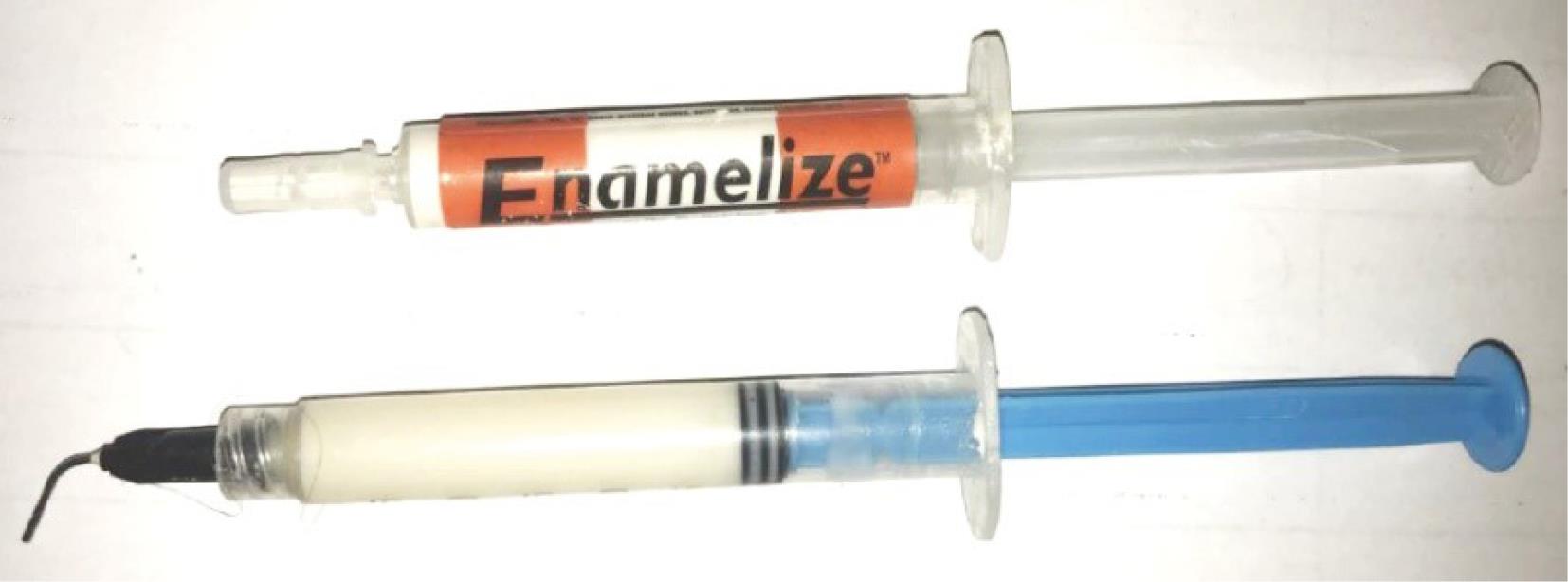
Figure 1.
Manufactured and Enamelize Polishing Pastes
.
Manufactured and Enamelize Polishing Pastes
Preparing Samples
A sample size of 10 per group was determined (α = 0.05 and 90% power). Ninety specimens (7 mm diameter × 2 mm height) were fabricated from hybrid, micro-hybrid, and nano-hybrid resin composites (Table 2). Specimens were prepared in Teflon molds lined with Mylar strips and light-cured using a DTE lux E unit (Woodpecker, Guilin, China) at 980 mW/cm2 (420–480 nm), according to the manufacturer’s instructions. All materials were obtained from Prime Dental Manufacturing (IL, USA). Prior to testing, specimens were stored in distilled water at 37 °C for 24 hours (20).
Table 2.
Composition and Characteristics of Composites and Abrasive Disks
|
Material
|
Composition
|
Producer
|
| Nano-hybrid composite |
Bis-GMA - Filler (average particle size = 0.70 μm) |
Prime Dental Manufacturing, IL, USA |
| Micro-hybrid composite |
Bis-GMA - Filler (average particle size = 10 μm) |
Prime Dental Manufacturing, IL, USA |
| Hybrid composite |
Bis-GMA - Filler (average particle size = 20-40 μm) |
Prime Dental Manufacturing, IL, USA |
| Sof-lex middle-grain abrasive discs |
Oxide alloy |
3M ESPE, St. Paul, MN, USA |
Specimens were finished using Sof-Lex Pop-On aluminum oxide discs (3M ESPE, St. Paul, MN, USA) for 30 seconds at 10 000 rpm with a low-speed handpiece (NSK, Tokyo, Japan), applying light pressure in a unidirectional manner from the restoration toward the margin to avoid creating a white line at the margin. The procedure was performed dry. Following finishing, the specimens were washed and air-dried (8). Subsequently, they were polished for 30 seconds at low speed using circular motions with either Enamelize (Cosmedent, IL, USA) or the manufactured polishing paste. Nine experimental groups (three composite types × two polishing pastes; n = 10/group) were established.
Surface roughness (Ra) was assessed using a contact profilometer (TR-200 PLUS, TESTECH, Barandal, Philippines) at three locations per specimen (sides and center), employing a tracing speed of 0.5 mm/s, a tracing length of 2 mm, and a cutoff length of 0.25 mm. The surface roughness value (Ra), representing the arithmetic average of the roughness profile, was the most common parameter used for this purpose. All measurements were performed by a single operator. Surface roughness (Ra) was measured for each specimen in three different directions, and the average was recorded. The mean Ra for each group (n = 10) was calculated using these average values.
Statistical Analysis
Descriptive statistics were computed, and two-way analysis of variance with a Tukey’s post hoc test (P < 0.05) was used to analyze the data by SPSS, version 23 (IBM, Armonk, New York, USA).
Results
Table 3 presents the mean surface roughness (Ra) values obtained with profilometry. Polishing with the manufactured paste resulted in a significant reduction in surface roughness (Figure 2). The mean Ra value for unpolished composites was 1.17 μm compared to 0.58 μm for those polished with the manufactured paste, representing approximately a twofold increase in surface smoothness. The highest roughness was found in the unpolished micro-hybrid composite, while the lowest roughness was observed in the nano-hybrid composite polished with the manufactured paste.
Table 3.
Average Surface Roughness (Ra) and SD
|
Process
|
Composite
|
Ra (μm)
|
SD (μm)
|
| No polishing |
Hybrid |
1.15 |
0.58 |
| Nano-hybrid |
0.57 |
0.22 |
| Micro-hybrid |
1.78 |
0.65 |
| Polish with Enamelize paste |
Hybrid |
0.77 |
0.26 |
| Nano-hybrid |
0.43 |
0.12 |
| Micro-hybrid |
0.86 |
0.23 |
| Polish with manufactured paste |
Hybrid |
0.64 |
0.18 |
| Nano-hybrid |
0.37 |
0.09 |
| Micro-hybrid |
0.74 |
0.17 |
Note. SD: Standard deviation.
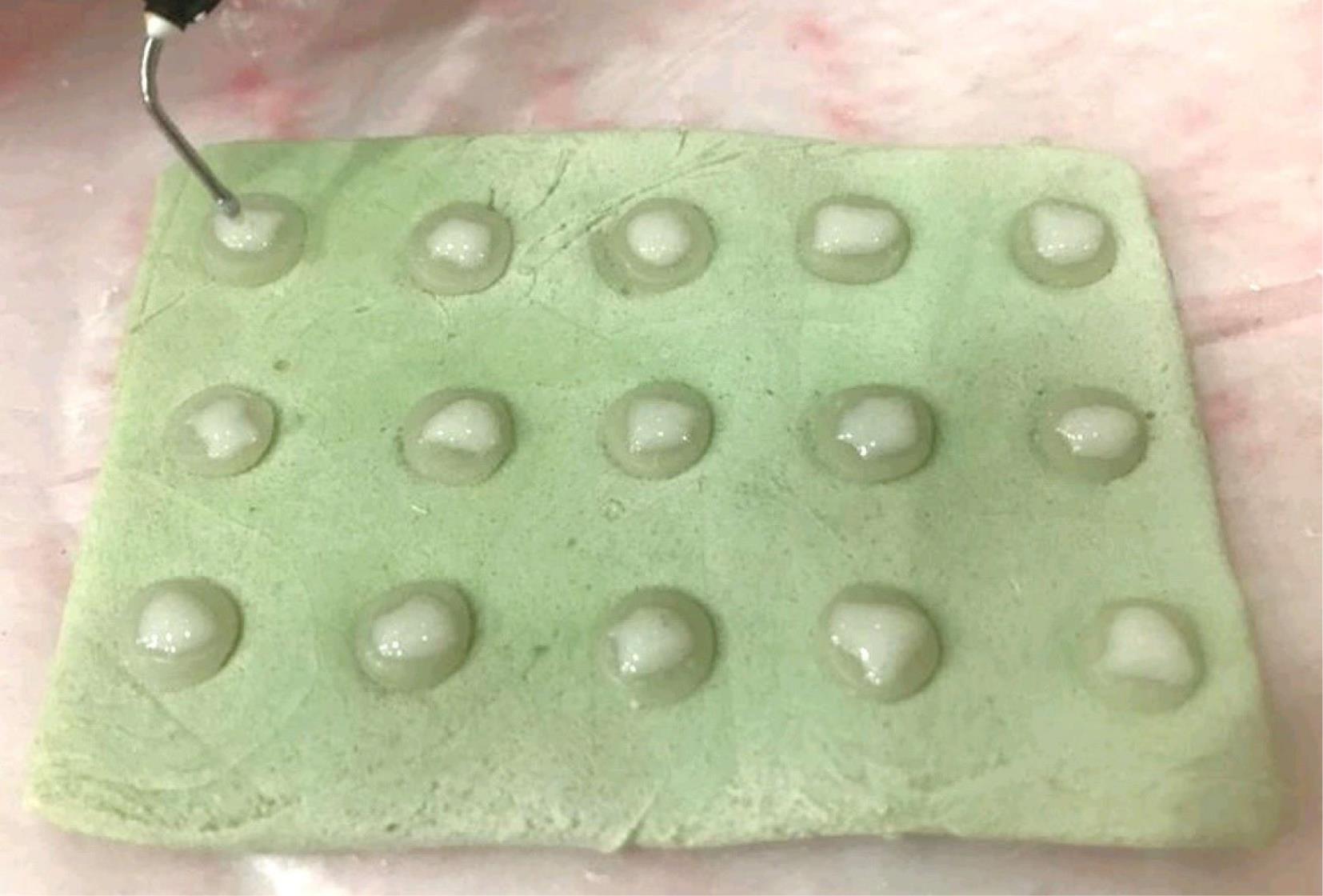
Figure 2.
Applying the Polishing Pastes to the Samples
.
Applying the Polishing Pastes to the Samples
Figure 3 depicts the stock chart of roughness values of three composite groups. In each composite group, the highest roughness value was observed in the unpolished samples. Across all three groups, polishing with the manufactured paste led to lower roughness values compared to the Enamelize paste.
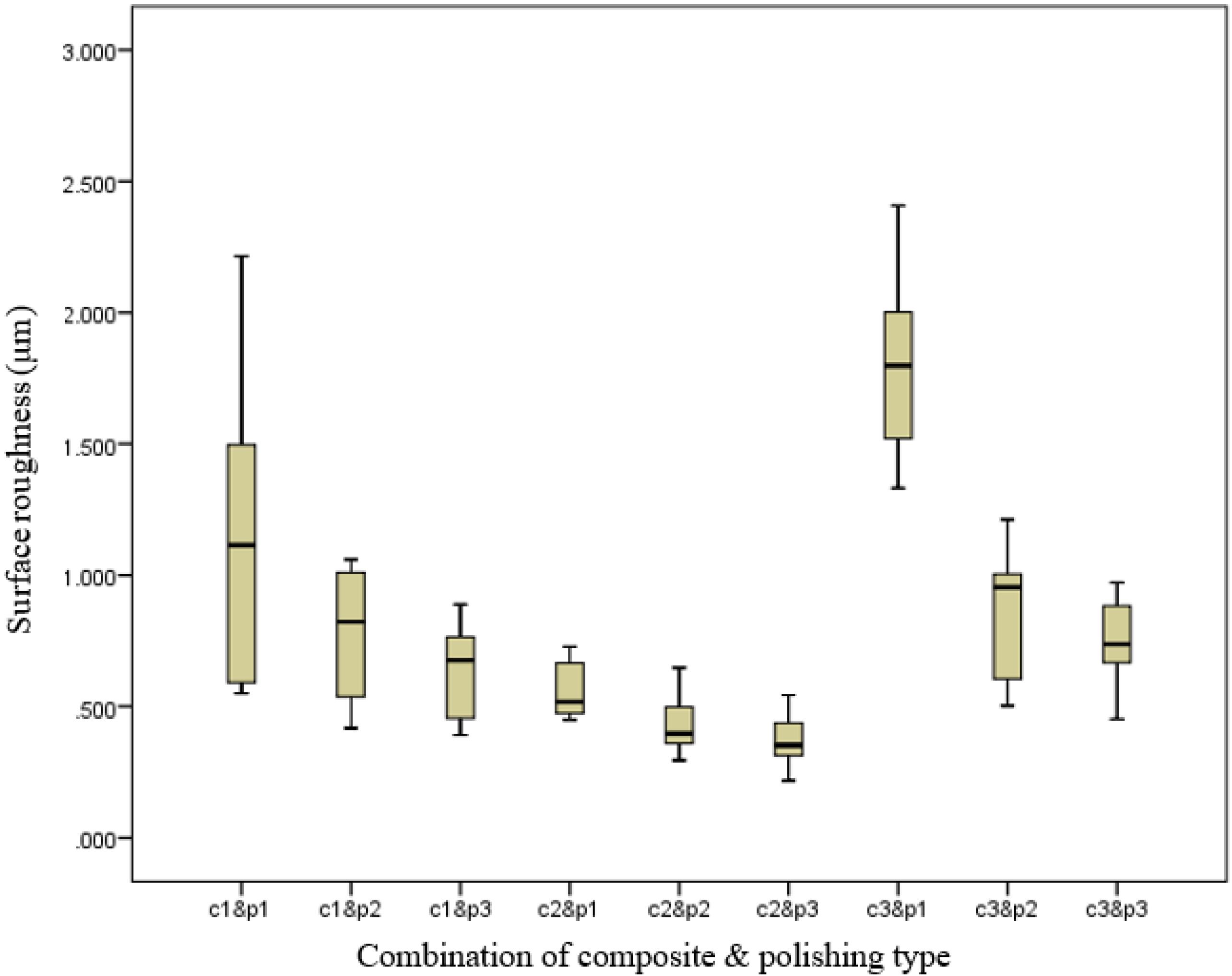
Figure 3.
Stock Chart of Roughness Values Determined for Different Groups of Tested Samples: (C1) Hybrid Composite, (C2) Nano-Hybrid Composite, (C3) Micro-Hybrid Composite, (P1) No Polishing, (P2) Polishing With Enamelize Paste, and (P3) Polishing With Manufactured Paste
.
Stock Chart of Roughness Values Determined for Different Groups of Tested Samples: (C1) Hybrid Composite, (C2) Nano-Hybrid Composite, (C3) Micro-Hybrid Composite, (P1) No Polishing, (P2) Polishing With Enamelize Paste, and (P3) Polishing With Manufactured Paste
Based on the results (Table 4), there was a statistically significant difference in surface roughness between unpolished and manufactured paste-polished specimens for all three composite types. Furthermore, statistically significant differences in polishability were found among the three composite types.
Table 4.
Comparison of Each Polishing Process (No Polishing, Enamelize Polishing Paste, and Manufactured Polishing Paste) on Polishability of Each Composite
|
Composite
|
Polish
|
Mean Difference (μm)
|
Standard Deviation (μm)
|
P
-value
(95% Confidence Interval)
|
| Hybrid |
No polishing |
Enamelize paste |
0.38 |
0.17 |
< 0.01* |
| Manufactured paste |
0.51 |
0.17 |
0.02* |
| Enamelize paste |
Manufactured paste |
0.13 |
0.17 |
0.85 |
| Nano-hybrid |
No polishing |
Enamelize paste |
0.13 |
0.07 |
0.18 |
| Manufactured paste |
0.19 |
0.07 |
0.03* |
| Enamelize paste |
Manufactured paste |
0.06 |
0.07 |
0.76 |
| Micro-hybrid |
No polishing |
Enamelize paste |
0.92 |
0.18 |
< 0.01* |
| Manufactured paste |
1.05 |
0.18 |
< 0.01* |
| Enamelize paste |
Manufactured paste |
0.12 |
0.18 |
0.88 |
* Statistically significantly different.
Discussion
This study evaluated the surface roughness of three resin composite types polished with two different pastes using profilometry and statistical analyses. The resulting surface roughness was influenced by both the composite type and the polishing procedure, which includes factors such as polymerization, finishing, and polishing techniques, as well as operator skill (21-23).
The optimal timing for finishing and polishing composite restorations remains debated, with some advocating immediate post-cure processing (within 5 minutes) while others recommend a 24-hour delay to minimize marginal damage from thermal effects (24). Several factors influence the quality of the finish, including the abrasive material’s hardness, geometry, and flexibility, as well as the applied speed (25,26). Operator skill has also been identified as a contributing factor (27). In this study, finishing and polishing were performed 24 hours post-cure, with a single operator to minimize inter-operator variability.
The polish of hybrid composites tends to lack durability (28). This limitation has led to the development of nanocomposites, which provide superior polish and gloss retention compared to hybrid options (29), as supported by some studies (26,30,31). In addition to enhanced surface smoothness, nanocomposites also exhibit reduced polymerization shrinkage, improved color stability, and better aesthetics (32,33).
Optimal surface smoothness was achieved in resin composite restorations in this study. Inadequate finishing and polishing can lead to undesirable outcomes, such as staining, biofilm accumulation, gingival inflammation, and secondary caries (34,35). While the ideal surface roughness remains undefined (with proposed ranges of 0.7–1.44 μm, 0.25–0.50 μm, and 0.2 μm), minimizing surface roughness is expected to reduce bacterial adhesion and staining, thereby mitigating plaque accumulation and the risk of caries and periodontal disease (7).
These findings are consistent with previous research. De Fátima Alves da Costa et al (36) demonstrated that using a felt disc with polishing paste following disc finishing (e.g., Sof-Lex) reduced surface roughness in nano-filled and nano-hybrid composites. Similarly, Ferreira et al (37) reported superior surface smoothness using felt discs and diamond paste compared to aluminum oxide discs, improving the surface finish of the Z350XT nanocomposite and Z250 micro-hybrid composite. Pietrokovski et al (18) also found significantly lower surface roughness with diamond-coated burs compared to disc polishing. Finally, Bansal et al (34) observed the lowest surface roughness with Mylar matrix polishing, followed by the Sof-Lex system.
Pettini et al confirmed the significant impact of finishing and polishing on composite surface quality (8), observing approximately twice the surface roughness (Ra) in unpolished specimens compared to those finished with medium Sof-Lex discs, tungsten carbide milling cutters (Q and UF series), and approximately 20% greater roughness compared to those finished with flame-shaped diamond milling cutters. AlJazairy et al (38) found the lowest surface roughness values using the PoGo polishing system, with mean Ra values of 0.060 μm and 0.108 μm for nano-hybrid and micro-hybrid composites, respectively.
Kaminedi et al (26) investigated the effect of finishing and polishing time on the surface roughness and microhardness of two composite resins and concluded that all finishing and polishing methods resulted in improved surface smoothness due to the removal of a superficial resin layer.
Consistent with the results of a number of studies (39-41), nano-hybrid composites exhibited the highest polishability with both manufactured and Enamelize pastes. The analysis of variance revealed that the manufactured paste yielded approximately a 100% reduction in surface roughness compared to the unpolished control group. No statistically significant difference in polishing efficacy was observed between the manufactured and Enamelize pastes, highlighting the effectiveness of the manufactured polishing paste in reducing surface roughness across all composite types evaluated in this study.
This study had limitations. First, profilometric roughness measurements were limited to linear profiles, whereas optical techniques could provide a more comprehensive surface area analysis. Second, a single experienced operator performed all procedures. While a standardized protocol was followed, inherent human variability (e.g., attention and tremor) may have influenced the results. Finally, clinicians should consider that composite filler characteristics (hardness, size, and composition) will influence the appropriate finishing and polishing system (17).
Conclusion
The main findings of this study are as follows:
-
The nano-hybrid composite showed more polishability compared to hybrid and micro-hybrid composites.
-
Both polishing pastes influenced the surface roughness of tested resin composites.
-
The manufactured paste (non-significantly) led to more reduction in surface roughness in all three composite groups compared to the Enamelize paste.
Acknowledgements
Theauthors appreciate the Dental School of Hamadan University of Medical Sciences, Hamadan, Iran, for financial and spiritual help.
Competing Interests
The authors declare that they have no conflict of interests.
Ethical Approval
The study protocol was approved by the Ethics Committee of Hamadan University of Medical Sciences (No. IR.UMSHA. REC.1397.909).
Funding
This study was financially supported by Hamadan University of Medical Sciences.
References
- Sadowsky SJ. An overview of treatment considerations for esthetic restorations: a review of the literature. J Prosthet Dent 2006; 96(6):433-42. doi: 10.1016/j.prosdent.2006.09.018 [Crossref] [ Google Scholar]
- Ritter AV. Direct resin-based composites: current recommendations for optimal clinical results. Compendium 2006; 26(7):369-77. [ Google Scholar]
- Anusavice KJ. Phillips’ Science of Dental Materials. St. Louis: WB Saunders; 2003.
- Ergücü Z, Türkün LS. Surface roughness of novel resin composites polished with one-step systems. Oper Dent 2007; 32(2):185-92. doi: 10.2341/06-56 [Crossref] [ Google Scholar]
- Janus J, Fauxpoint G, Arntz Y, Pelletier H, Etienne O. Surface roughness and morphology of three nanocomposites after two different polishing treatments by a multitechnique approach. Dent Mater 2010; 26(5):416-25. doi: 10.1016/j.dental.2009.09.014 [Crossref] [ Google Scholar]
- Marghalani HY. Effect of filler particles on surface roughness of experimental composite series. J Appl Oral Sci 2010; 18(1):59-67. doi: 10.1590/s1678-77572010000100011 [Crossref] [ Google Scholar]
- Hossam AE, Rafi AT, Ahmed AS, Sumanth PC. Surface topography of composite restorative materials following ultrasonic scaling and its Impact on bacterial plaque accumulation An in-vitro SEM study. J Int Oral Health 2013; 5(3):13-9. [ Google Scholar]
- Pettini F, Corsalini M, Savino MG, Stefanachi G, Di Venere D, Pappalettere C. Roughness analysis on composite materials (microfilled, nanofilled and silorane) after different finishing and polishing procedures. Open Dent J 2015; 9:357-67. doi: 10.2174/1874210601509010357 [Crossref] [ Google Scholar]
- da Silva EM, de Sá Rodrigues CU, Dias DA, da Silva S, Amaral CM, Guimarães JG. Effect of toothbrushing-mouthrinse-cycling on surface roughness and topography of nanofilled, microfilled, and microhybrid resin composites. Oper Dent 2014; 39(5):521-9. doi: 10.2341/13-199-l [Crossref] [ Google Scholar]
- da Silva EM, Dória J, de Jesus Rodrigues da Silva J, Santos GV, Guimarães JG, Poskus LT. Longitudinal evaluation of simulated toothbrushing on the roughness and optical stability of microfilled, microhybrid and nanofilled resin-based composites. J Dent 2013; 41(11):1081-90. doi: 10.1016/j.jdent.2013.08.013 [Crossref] [ Google Scholar]
- dos Santos PH, Catelan A, Albuquerque Guedes AP, Umeda Suzuki TY, de Lima Godas AG, Fraga Briso AL. Effect of thermocycling on roughness of nanofill, microfill and microhybrid composites. Acta Odontol Scand 2015; 73(3):176-81. doi: 10.3109/00016357.2014.971868 [Crossref] [ Google Scholar]
- Bollen CM, Lambrechts P, Quirynen M. Comparison of surface roughness of oral hard materials to the threshold surface roughness for bacterial plaque retention: a review of the literature. Dent Mater 1997; 13(4):258-69. doi: 10.1016/s0109-5641(97)80038-3 [Crossref] [ Google Scholar]
- Corsalini M, Boccaccio A, Lamberti L, Pappalettere C, Catapano S, Carossa S. Analysis of the performance of a standardized method for the polishing of methacrylic resins. Open Dent J 2009; 3:233-40. doi: 10.2174/1874210600903010233 [Crossref] [ Google Scholar]
- Corsalini M, Carella M, Boccaccio A, Lamberti L, Pappalettere C, Catapano S. An alternative approach to the polishing technique for acrylic resin surfaces. Int J Prosthodont 2008; 21(5):409-12. [ Google Scholar]
- Kocaagaoglu H, Aslan T, Gürbulak A, Albayrak H, Taşdemir Z, Gumus H. Efficacy of polishing kits on the surface roughness and color stability of different composite resins. Niger J Clin Pract 2017; 20(5):557-65. doi: 10.4103/1119-3077.181387 [Crossref] [ Google Scholar]
- Türkün LS, Türkün M. The effect of one-step polishing system on the surface roughness of three esthetic resin composite materials. Oper Dent 2004; 29(2):203-11. [ Google Scholar]
- Babina K, Polyakova M, Sokhova I, Doroshina V, Arakelyan M, Novozhilova N. The effect of finishing and polishing sequences on the surface roughness of three different nanocomposites and composite/enamel and composite/cementum interfaces. Nanomaterials (Basel) 2020; 10(7):1339. doi: 10.3390/nano10071339 [Crossref] [ Google Scholar]
- Pietrokovski Y, Zeituni D, Schwartz A, Beyth N. Comparison of different finishing and polishing systems on surface roughness and bacterial adhesion of resin composite. Materials (Basel) 2022; 15(21):7415. doi: 10.3390/ma15217415 [Crossref] [ Google Scholar]
- Hoelscher DC, Neme AM, Pink FE, Hughes PJ. The effect of three finishing systems on four esthetic restorative materials. Oper Dent 1998; 23(1):36-42. [ Google Scholar]
- Schmitt VL, Puppin-Rontani RM, Naufel FS, Nahsan FP, Alexandre Coelho Sinhoreti M, Baseggio W. Effect of the polishing procedures on color stability and surface roughness of composite resins. ISRN Dent 2011; 2011:617672. doi: 10.5402/2011/617672 [Crossref] [ Google Scholar]
- Berger SB, Palialol AR, Cavalli V, Giannini M. Surface roughness and staining susceptibility of composite resins after finishing and polishing. J Esthet Restor Dent 2011; 23(1):34-43. doi: 10.1111/j.1708-8240.2010.00376.x [Crossref] [ Google Scholar]
- da Costa JB, Goncalves F, Ferracane JL. Comparison of two-step versus four-step composite finishing/polishing disc systems: evaluation of a new two-step composite polishing disc system. Oper Dent 2011; 36(2):205-12. doi: 10.2341/10-162-l [Crossref] [ Google Scholar]
- Hosoya Y, Shiraishi T, Ando S, Miyazaki M, Garcia-Godoy F. Effects of polishing on surface roughness and gloss of S-PRG filled flowable resin composite. Am J Dent 2012; 25(4):227-30. [ Google Scholar]
- de la Macorra JC, Romero B. Full mapping tensile bond strength of luting in search for differences due to centripetal curing shrinkage. Dent Mater 2022; 38(4):e69-82. doi: 10.1016/j.dental.2022.02.008 [Crossref] [ Google Scholar]
- Ferraris F, Conti A. Superficial roughness on composite surface, composite-enamel and composite-dentin junctions after different finishing and polishing procedures Part II: roughness with polishers treatment after carbide and diamond finishing and differences between enamel composite vs body composite. Int J Esthet Dent 2014; 9(2):184-204. [ Google Scholar]
- Kaminedi RR, Penumatsa NV, Priya T, Baroudi K. The influence of finishing/polishing time and cooling system on surface roughness and microhardness of two different types of composite resin restorations. J Int Soc Prev Community Dent 2014; 4(Suppl 2):S99-104. doi: 10.4103/2231-0762.146211 [Crossref] [ Google Scholar]
- Zhong ZW. Surface roughness of machined wood and advanced engineering materials and its prediction: a review. Adv Mech Eng 2021; 13(5):16878140211017632. doi: 10.1177/16878140211017632 [Crossref] [ Google Scholar]
- LeSage BP. Aesthetic anterior composite restorations: a guide to direct placement. Dent Clin North Am 2007; 51(2):359-78. doi: 10.1016/j.cden.2007.02.001 [Crossref] [ Google Scholar]
- Aydın N, Topçu FT, Karaoğlanoğlu S, Oktay EA, Erdemir U. Effect of finishing and polishing systems on the surface roughness and color change of composite resins. J Clin Exp Dent 2021; 13(5):e446-54. doi: 10.4317/jced.58011 [Crossref] [ Google Scholar]
- Kumari CM, Bhat KM, Bansal R. Evaluation of surface roughness of different restorative composites after polishing using atomic force microscopy. J Conserv Dent 2016; 19(1):56-62. doi: 10.4103/0972-0707.173200 [Crossref] [ Google Scholar]
- Rai R, Gupta R. In vitro evaluation of the effect of two finishing and polishing systems on four esthetic restorative materials. J Conserv Dent 2013; 16(6):564-7. doi: 10.4103/0972-0707.120946 [Crossref] [ Google Scholar]
- Kumari RV, Nagaraj H, Siddaraju K, Poluri RK. Evaluation of the effect of surface polishing, oral beverages and food colorants on color stability and surface roughness of nanocomposite resins. J Int Oral Health 2015; 7(7):63-70. [ Google Scholar]
- Tărăboanță I, Stoleriu S, Nica I, Georgescu A, Gamen AC, Maftei GA. Roughness variation of a nanohybrid composite resin submitted to acid and abrasive challenges. Int J Med Dent 2020; 24(2):182-7. [ Google Scholar]
- Bansal K, Gupta S, Nikhil V, Jaiswal S, Jain A, Aggarwal N. Effect of different finishing and polishing systems on the surface roughness of resin composite and enamel: an in vitro profilometric and scanning electron microscopy study. Int J Appl Basic Med Res 2019; 9(3):154-8. doi: 10.4103/ijabmr.IJABMR_11_19 [Crossref] [ Google Scholar]
- Beltrami R, Ceci M, De Pani G, Vialba L, Federico R, Poggio C. Effect of different surface finishing/polishing procedures on color stability of esthetic restorative materials: a spectrophotometric evaluation. Eur J Dent 2018; 12(1):49-56. doi: 10.4103/ejd.ejd_185_17 [Crossref] [ Google Scholar]
- de Fátima Alves da Costa G, de Carvalho Justo Fernandes AC, de Oliveira Carvalho LA, de Andrade AC, de Assunção IV, Borges BC. Effect of additional polishing methods on the physical surface properties of different nanocomposites: SEM and AFM study. Microsc Res Tech 2018; 81(12):1467-73. doi: 10.1002/jemt.23147 [Crossref] [ Google Scholar]
- Ferreira PM, Souto SH, Borges BC, de Assunção IV, de Fátima Alves da Costa G. Impact of a novel polishing method on the surface roughness and micromorphology of nanofilled and microhybrid composite resins. Rev Port Estomatol Med Dent Cir Maxilofac 2015; 56(1):18-24. doi: 10.1016/j.rpemd.2015.01.002 [Crossref] [ Google Scholar]
- AlJazairy YH, Mitwalli HA, AlMoajel NA. The effect of polishing systems on surface roughness of nanohybrid and microhybrid resin composites. Am J Dent 2019; 32(1):47-52. [ Google Scholar]
- Aydin N, Karaoglanoglu S, Oktay EA, Ersoz B. Effect of additional polishing application on the surface roughness and color change of composite resins. Turk Klin J Dent Sci 2021; 27(3):462-9. doi: 10.5336/dentalsci.2020-79006 [Crossref] [ Google Scholar]
- Batista GR, Zanatta RF, Borges AB, Torres CR. The effects of polishing techniques on surface roughness and gloss of different composites. Gen Dent 2021; 69(5):46-51. [ Google Scholar]
- Szczepaniak ME, Krasowski M, Bołtacz-Rzepkowska E. The effect of various polishing systems on the surface roughness of two resin composites—an in vitro study. Coatings 2022; 12(7):916. doi: 10.3390/coatings12070916 [Crossref] [ Google Scholar]