Avicenna J Dent Res. 17(1):41-50.
doi: 10.34172/ajdr.2098
Review Article
Clinical Outcomes of Resin-Based Materials in Vital Pulp Therapy: A Systematic Review and Meta-analysis of Randomized Control Trials
R Jesanth Joel Conceptualization, Data curation, Investigation, Methodology, Visualization, Writing – original draft, 1, * 
Swathi Priyadharshini Conceptualization, Investigation, Methodology, Supervision, Validation, Visualization, Writing – original draft, 1, 2
Manu Unnikrishnan Formal analysis, Investigation, Project administration, Supervision, Validation, 3
S Rathna Piriyanga Data curation, Project administration, Writing – review & editing, 1
KG GeethDeepika Data curation, Project administration, Writing – review & editing, 1GSV Nivashini 1
Author information:
1Department of Conservative Dentistry and Endodontics, CSI College of Dental Sciences and Research, Madurai, Tamil Nadu - 625001
2Saveetha Institute of Medical And Technical Sciences, 162, Poonamallee High Rd, Velappanchavadi, Kattupakkam, Chennai, Tamil Nadu 600077
3Department of Conservative Dentistry and Endodontics, AIMST University, Jalan semling, Kedah, Malaysia
Abstract
Background: Pulpal damage or exposure from dental caries provides a channel for microbial contamination, potentially leading to endodontic pathology if untreated. Vital pulp therapy (VPT) represents a less invasive alternative, aiming at sustaining the health and functionality of the compromised pulp. This systematic review and meta-analysis explored the clinical outcomes of resin-based materials compared to traditional materials in VPT.
Methods: PRISMA guidelines were followed when conducting this systematic review, registered in PROSPERO (CRD42024552414). The PICO format framed the research question. Several databases were searched, including Google Scholar, PubMed, Scopus, Wiley Online Library, and SpringerLink (January 2014 to June 2024). The inclusion criteria were randomized control trials (RCTs) on VPT using resin-based materials in permanent teeth, while the exclusion criteria included non-RCTs, case reports, in vitro studies, and studies on primary teeth. Data extraction and quality assessment were performed using the RoB 2 tool. Meta-analysis was conducted with Jamovi 2.3.28 by employing the Sidik–Jonkman model based on standardized mean differences (SMD) due to the high heterogeneity of the included studies.
Results: From 2864 articles, six RCTs qualified under the inclusion criteria. The meta-analysis of six studies revealed no significant overall effect (Tau2=0.1679) and a substantial level of heterogeneity (I2=73.35%).
Conclusion: Traditional materials (MTA and Biodentine) remain effective for VPT. New resin-based materials demonstrate promise but require further research to establish their long-term clinical efficacy. Future studies should aim to reduce heterogeneity and include longer follow-up periods to validate these findings.
Keywords: Biodentine, Calcium hydroxide, MTA, Randomized control trials, Resin-based materials, Vital pulp therapy
Copyright and License Information
© 2025 The Author(s); Published by Hamadan University of Medical Sciences.
This is an open-access article distributed under the terms of the Creative Commons Attribution License (
https://creativecommons.org/licenses/by/4.0), which permits unrestricted use, distribution, and reproduction in any medium provided the original work is properly cited.
Please cite this article as follows: Joel RJ, Priyadharshini S, Unnikrishnan M, Piriyanga SR, GeethDeepika KG, Nivashini GSV. Clinical outcomes of resin-based materials in vital pulp therapy: a systematic review and meta-analysis of randomized control trials. Avicenna J Dent Res. 2025;17(1):41-50. doi:10.34172/ajdr.2098
Background
Pulpal exposure or injury due to caries opens a channel for microbial invasion into the pulp tissue, potentially causing endodontic pathology if untreated. Vital pulp therapy (VPT) addresses compromised pulp while maintaining its vitality and function. It encompasses procedures such as indirect pulp capping, direct pulp capping (DPC), partial pulpotomy, and full pulpotomy (1). These procedures involve capping biocompatible materials applied to asymptomatic vital pulp tissue to ensure continued vitality (1,2). VPT is indicated for reversible pulpitis, mechanical or traumatic pulp exposure, and immature teeth with open apices (3). However, it is contraindicated in cases of large pulp exposure and periodontally compromised teeth. Traditionally, root canal treatment is considered destructive, whereas VPT is technically easier and recommended for reversible pulpitis cases, traumatic pulp exposure, and minor pinpoint pulp exposure (4). Preserving pulp vitality maintains dentine deposition, immunological response, and proprioceptive functions. Historically, DPC materials have traditionally relied on calcium hydroxide as the gold standard (5). Biodentine, a newer biocompatible and bioactive dentin substitute, is noted for its fast setting, high compressive strength, and ease of handling, making it suitable for VPT applications (6). However, mineral trioxide aggregate (MTA) is now regarded as the gold standard despite its drawbacks, including prolonged setting time, handling difficulty, high cost, and potential for tooth discoloration (7).
Recently, resin-based pulp capping materials, such as resin-modified glass ionomer cement (RMGIC), TheraCal LC, Calcimol LC, and iRootBP Plus, have been developed, offering easier handling properties. Resin-based materials, including Calcimol LC (calcium hydroxide-containing) and TheraCal LC (calcium silicate-containing), are gaining attention due to their improved handling, quicker setting times, and superior physical properties. Newer resin-based materials, such as TheraCal LC, introduced in 2011, offer improved sealing and bonding ability to moist dentin. RMGICs, such as Fuji II LC, presented in 1991, demonstrate favorable responses in deep cavities despite being cytotoxic to the pulp (8). RMGIC offers the combined benefits of glass-ionomer cement, including strong adhesion to the tooth structure, fluoride release, and biocompatibility, along with the convenience of light-curing for easier handling. Fuji II LC, a tri-cured RMGIC, differs from older GICs (e.g., Vitremer and Vitrebond) due to its inclusion of leachable substances such as hydroxyethyl methacrylate, camphorquinone, and potassium persulfate. These components may be responsible for its cytotoxicity. This innovation introduces both advantages and concerns (9). EndoSequence root repair material (ERRM), introduced in 2009, is bioactive and creates a hydroxyapatite layer on its surface, promoting dentin repair (10). Resin-based pulp-capping materials, such as TheraCal LC and LC Calcihyd, which is light-cured calcium hydroxide, have demonstrated superior vital responses in cases of larger pulpal exposures. This can be attributed to their rapid setting through polymerization and the enhanced mechanical sealing achieved during the procedure (11).
Despite these advancements, there is uncertainty regarding the long-term clinical efficacy and biocompatibility of resin-based materials compared to traditional ones. This analysis aims to systematically review and analyze the clinical outcomes of resin-based materials in VPT, comparing them with conventional non-resin materials. The findings are expected to inform clinical practice and guide future research.
Materials and Methods
This systematic review followed Preferred Reporting Items for Systematic Reviews and Meta-Analyses (PRISMA) guidelines and was registered in the PROSPERO database (CRD42024552414). The PICO format was used to frame the research question: Population (P): studies on VPT procedures; Intervention (I): Resin-based pulp capping materials; Comparison (C): Conventional non-resin pulp capping materials; Outcome (O): Clinical and radiographic outcomes.
Search Strategy and Information Sources
A literature search is initiated by performing a computerized search of randomized control clinical trials (RCTs) on VPT comparing resin-based and conventional pulp-capping materials published in Google Scholar, PubMed, Scopus, Wiley Online Library, and SpringerLink (between January 2014 and June 2024). The search strategy was implemented by several keywords related to the topic.
Keywords and Tags for Search Strategy
Treatment Type: “Vital pulp therapy”, “Direct pulp capping”, “Indirect pulp capping”, and “Pulpotomy”
Materials: Capping agents - “Calcium Hydroxide”, “Mineral Trioxide Aggregate”, “Biodentine”, and “Resin Based pulp capping materials”
Resin–Based Agents: “TheraCal LC”, “Apacal LC”, “Calcimol LC”, and “Activa bioactive resin”
Calcium Hydroxide Products: Dycal
Bioactive Materials and Root Repair: “Endosequence root repair material” and “iRootBP plus”, “NeoMTA plus”, and “NeoMTA”
Additional Materials: “Resin-modified glass-ionomer cement (RMGIC)” and “Nanohybrid Composite”
Study Design: “Randomized control trials”
Target Population: “Permanent teeth”
Condition: “Symptomatic reversible pulpitis”
Comprehensive Search Strategy for Article Selection
(vital pulp therapy) OR (direct pulp capping)) OR (pulpotomy)) OR (indirect pulp capping)) AND (calcium hydroxide)) OR (mineral Trioxide Aggregate)) OR (Biodentine)) OR (Resin based pulp capping materials)) OR (TheraCal LC)) OR (Apacal LC)) OR (Calcimol LC)) OR (Dycal)) OR (Activa Bioactive resin)) OR (Endosequence root repair material)) OR (iRootBP plus)) OR (NeoMTA)) OR (NeoMTA plus)) OR (resin-modified glass ionomer cement)) OR (nanohybrid composite)) AND (randomized control trials)) OR (permanent teeth)) OR (symptomatic reversible pulpitis)
Only studies published in English were included in this investigation. The abstracts and the titles of all potentially significant studies were identified for relevance before retrieving the full text of the article. Additional hand searching was performed for the volumes and issues of key journals to search through indexes and special issues. The review process was implemented by three reviewers who evaluated the abstracts and full texts of the selected articles, and any disagreement was resolved through consensus meetings. A search of grey literature was conducted using OpenGrey (https://opengrey.eu/), Google Scholar (https://scholar.google.com/), and GreyNet (https://www.greynet.org/), but no relevant data were identified.
Inclusion Criteria
-
RCTs on VPT
-
VPT performed using resin-based pulp-capping materials
-
VPT performed on permanent teeth of age group 13–45 years
-
Studies with VPT performed on patients with symptomatic reversible pulpitis
-
Studies with VPT performed on both males and females
Exclusion Criteria
-
Review articles on VPT
-
Case reports and case series on VPT
-
In vitro studies on pulp-capping materials
-
Studies performed on primary teeth
The PRISMA flowchart (Figure 1) explains the selection procedure.
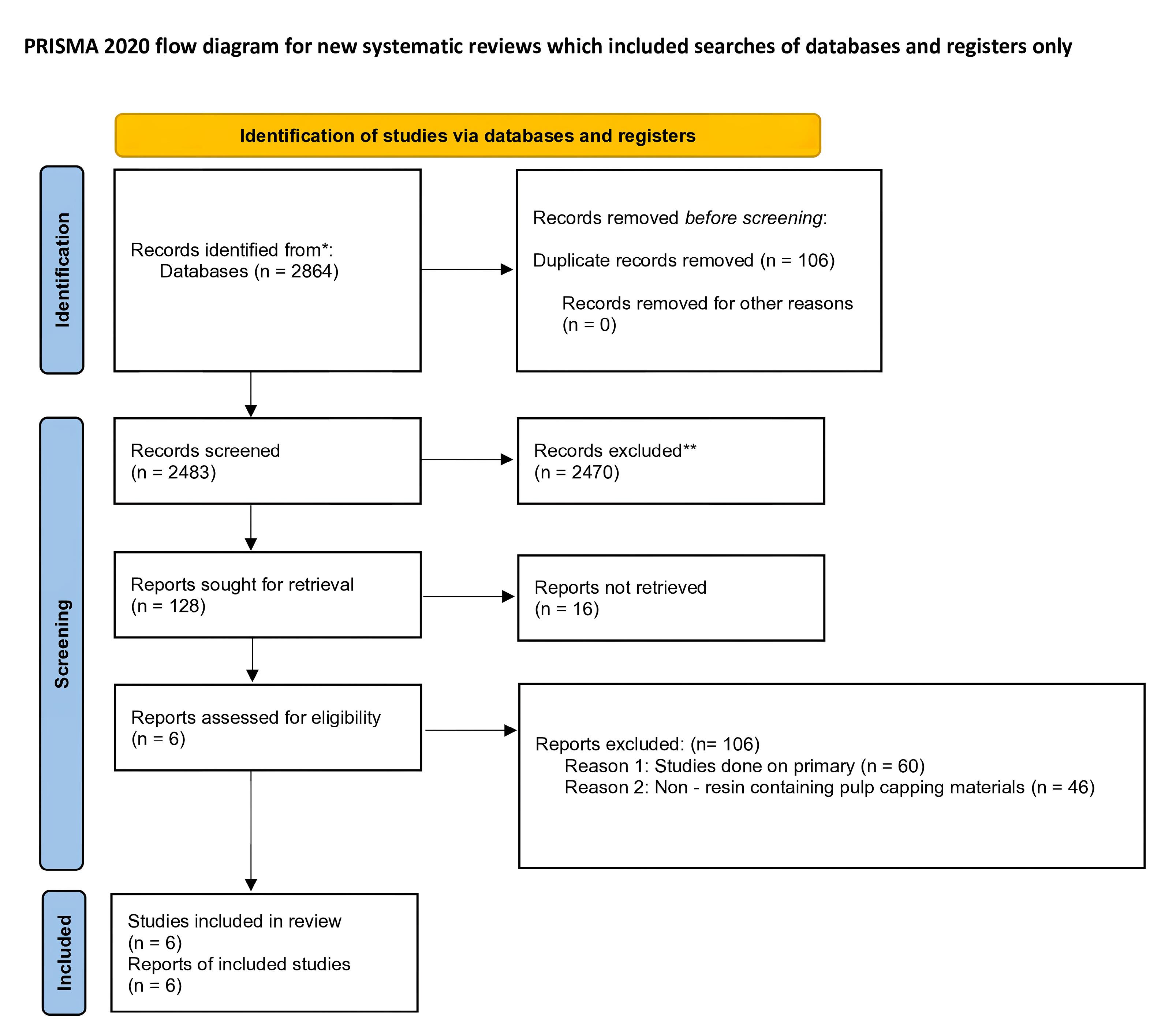
Figure 1.
Flowchart for the Inclusion of Studies
.
Flowchart for the Inclusion of Studies
Data Extraction
The chosen studies were acquired from Google Scholar, PubMed, Scopus, Wiley Online Library, and SpringerLink and were imported into the Rayyan AI database (https://www.rayyan.ai/). The evaluation focused on articles addressing RCTs involving resin-based materials used for VPT, particularly emphasizing clinical outcomes, success rates, and radiographic results.The inclusion criteria included RCTs with sufficient follow-up periods and clinical-radiographic evidence comparing either traditional pulp-capping materials with resin-based materials or two types of resin-based materials. Studies had to meet specific diagnostic criteria and provide relevant clinical and radiographic outcomes.Three investigators independently extracted the data and conducted an initial analysis for eligibility. Abstracts meeting the inclusion criteria were selected based on the publication year, study type, diagnostic criteria, and documented clinical and radiographic outcomes. Any discrepancies among the investigators were resolved through consensus meetings.The finalized data, along with the full-text articles, were organized and stored in the Rayyan AI database for a comprehensive final evaluation. This process ensured that all selected studies were systematically reviewed and analyzed for inclusion in the systematic review. Figure 1 describes the process of data extraction and study inclusion for this systematic review. The population characteristics of the six included articles are summarized in Table 1, and the detailed study characteristics, including design and methodology, are presented in Table 2. The reasons for the exclusion of various studies in this systematic review are listed in Table 3. Following article retrieval, two reviewers independently evaluated each article, and their inter-rater reliability was assessed using the Cohen kappa statistic. The agreement was categorized as follows:
κ = 1.00: Perfect agreement, κ = 0.81–1.00: Almost perfect or strong agreement, κ = 0.61–0.80: Substantial agreement, κ = 0.41–0.60: Moderate agreement, κ = 0.21–0.40: Fair agreement, κ = 0.01–0.20: Slight agreement, κ = 0.00 or less: Poor or no agreement beyond chance (12).
Table 1.
Population/Participant Characteristics
|
Study
|
Sample Size
|
Mean/Median (Follow–up Time in Months)
|
Cause of Pulpal Exposure
|
Type of Tooth
|
Pulpal Diagnosis
|
Gender (M: F)
|
Root Development
|
Type of Randomization
|
Sample Size in Each Group
|
| Zhang et al (2024) (2) |
115 |
1 year |
Carious |
Maxillary and mandibular premolars and molars |
Symptomatic reversible/
irreversible pulpitis |
34:70 |
Closed apex |
Simple randomization |
Group A – 57
Group B - 58 |
| Covaci et al (2022) (5) |
96 |
5 years |
Carious |
Maxillary and mandibular molars |
Symptomatic reversible pulpitis |
28:67 |
Closed apex |
Simple randomization |
Group A – 51
Group B – 31
Group C - 14 |
| Rahman and Goswami (2021) (6) |
60 |
2 years |
Carious |
Maxillary and mandibular molars |
Symptomatic reversible pulpitis |
23:26 |
Closed apex |
Simple randomization |
Group A – 20
Group B – 20
Group C - 20 |
| Nagi et al (2024) (7) |
22 |
7 months |
Carious |
Mandibular
molars |
Symptomatic reversible pulpitis |
11:9 |
Closed apex |
Simple randomization |
Group A – 11
Group B - 11 |
| Aanchal et al (2021) (9) |
45 |
6 months |
Carious |
Maxillary and mandibular
molars |
Symptomatic reversible pulpitis |
Not specified |
Closed apex |
Simple randomization |
Group A – 15
Group – 15
Group C - 15 |
| Peskersoy et al (2020) (11) |
525 |
3 years |
Carious |
Maxillary and mandibular molars |
Symptomatic reversible pulpitis |
Not specified |
Closed apex |
Simple randomization |
5 groups (105 participants per group) |
Note. Ref. No.: Reference number; M: Male; F: Female.
Table 2.
Characteristics of Included Studies
|
Authors
|
Location
|
Materials
|
Procedure
|
Rubber Dam Isolation
|
Final Restoration
|
Follow-up Time
|
Outcome Assessment
|
Results
|
| Zhang et al (2024) (2) |
China |
TheraCal LC and iRootBP plus |
Direct pulp capping and partial and full pulpotomy |
Performed |
Light-cured glass ionomer (Ionosit; DMG, Hamburg, Germany) and resin-bonded composite (Filtek Z350, 3M ESPE |
1 year |
Clinical and radiographic |
TheraCal LC was better than iRoorBP plus |
| Covaci et al (2022) (5) |
Romania |
TheraCal LC, Calcimol LC, and Life Kerr AC (Calcium Hydroxide) |
Direct pulp capping |
Not specified |
Glass ionomer cement and resin composite |
6 months |
Clinical and radiographic |
TheraCal LC showed better results than Calcimol LC |
| Rahman and Goswami (2021) (6) |
India |
Biodentine, TheraCal LC and Dycal |
Indirect pulp capping |
Performed |
Glass ionomer cement and resin composite |
24 months |
Clinical and radiographic |
TheraCal LC was better than Biodentine |
| Nagi et al (2024) (7) |
Egypt |
TheraCal LC and MTA |
Pulpotomy |
Performed |
Composite (Zhermack SpA - Via Bovazecchino©) |
5 years |
Clinical and radiographic |
MTA group showed higher success rates |
| Aanchal et al (2021) (9) |
India |
RMGIC, MTA, and calcium hydroxide |
Direct pulp capping |
Performed |
Silver amalgam (ARISTA-ALLOY 21, Cookson Precious Metals Ltd., Birmingham, UK) |
6 months |
Clinical and radiographic |
RMGIC yielded better results |
| Peskersoy et al (2020) (11) |
Turkey |
Calcium Hydroxide, Light cured Calcium Hydroxide, TheraCal LC, Biodentine, and BioMTA + |
Direct pulp capping |
Performed |
Universal self-etching adhesive system (Beauti Bond, Shofu Corp, Tokyo, Japan) and nanohybrid composite resin (Beautifil II, Shofu Corp) |
3 years |
Clinical and radiographic |
Biodentine and MTA showed higher success rates compared to TheraCal LC and LC Calcihyd at the end of 3 years |
Note. RMGIC: Resin-modified glass ionomer cement; MTA: Mineral trioxide aggregate.
Table 3.
Reasons for Exclusion of Studies
|
Reason for Exclusion
|
Authors
|
| Studies performed on non-resin-based pulp-capping materials |
Cho et al (13) |
| Bayoumy et al (14) |
| Kang et al (15) |
| Studies conducted on primary molars |
Bhatt et al (16) |
| Studies performed using LASER |
Yazdanfar et al (17) |
| Studies based on regenerative endodontics |
Doranala et al (18) |
Inter-rater reliability was measured using Cohen’s kappa statistics to determine the level of agreement between the two reviewers in deciding whether to include or exclude an article. The detailed kappa statistics data are provided in Table S1. A contingency table summarizing the inclusion and exclusion decisions is presented in Table S2 (see Supplementary file 1).
Quality Assessment
Two investigators used the Cochrane RevMan RoB 2 tool to assess the quality of the included studies, focusing on five bias domains, namely, randomization, deviations from interventions, missing outcome data, outcome measurement, and selection of reported results. Each domain was rated as ‘low risk,’ ‘some concerns,’ or ‘high risk,’ with these judgments applied to the overall risk of bias for each study (19). The reviewers evaluated specific trial results and resolved discrepancies through consensus meetings, involving a third reviewer when necessary. This collaborative approach ensured a balanced and reliable evaluation of the risk of bias, enhancing the quality assessment process. The quality results assessed by the reviewers are summarized in Figure 2, and Figure 3 represents the risk of bias.
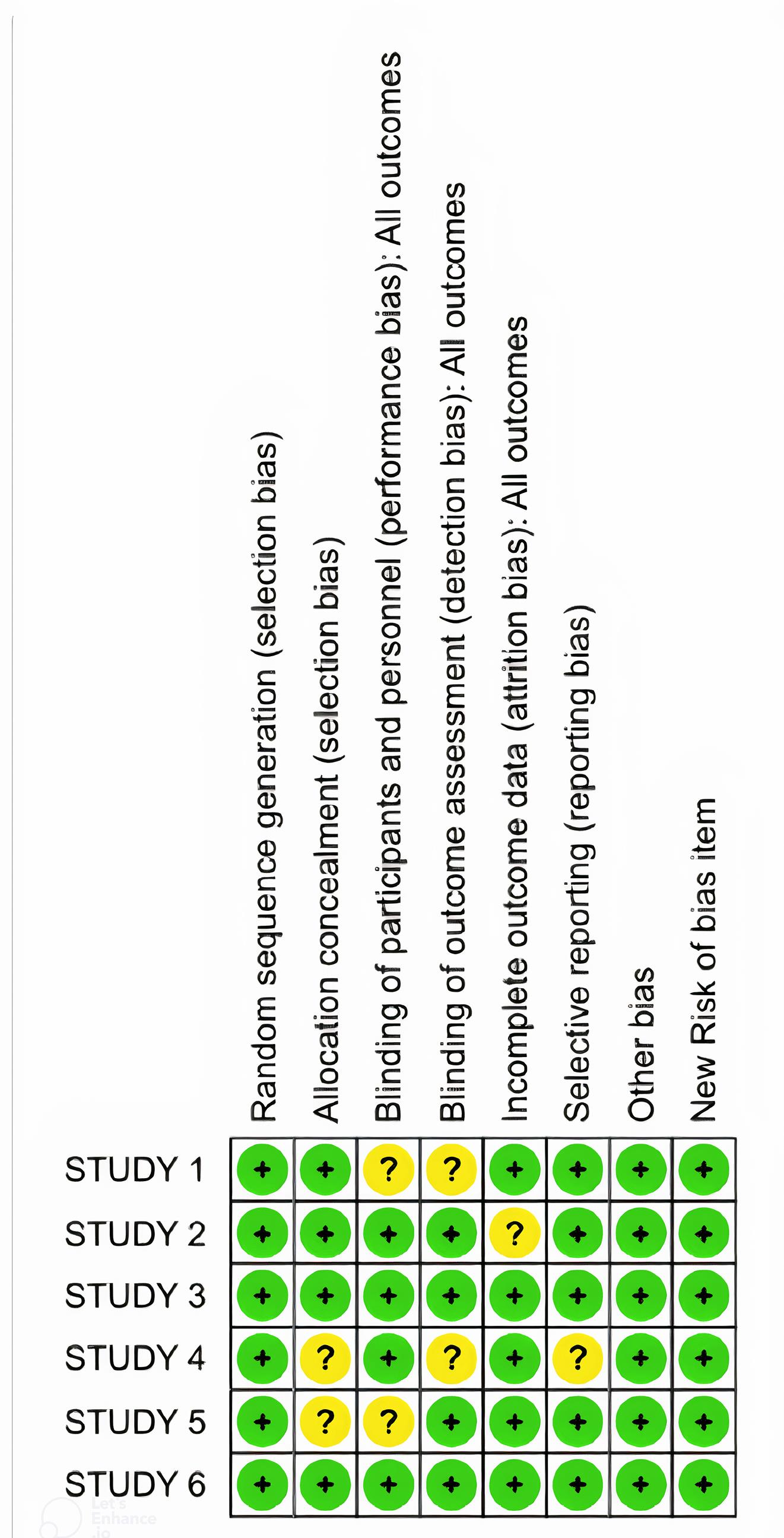
Figure 2.
Risk of Bias Summary
.
Risk of Bias Summary
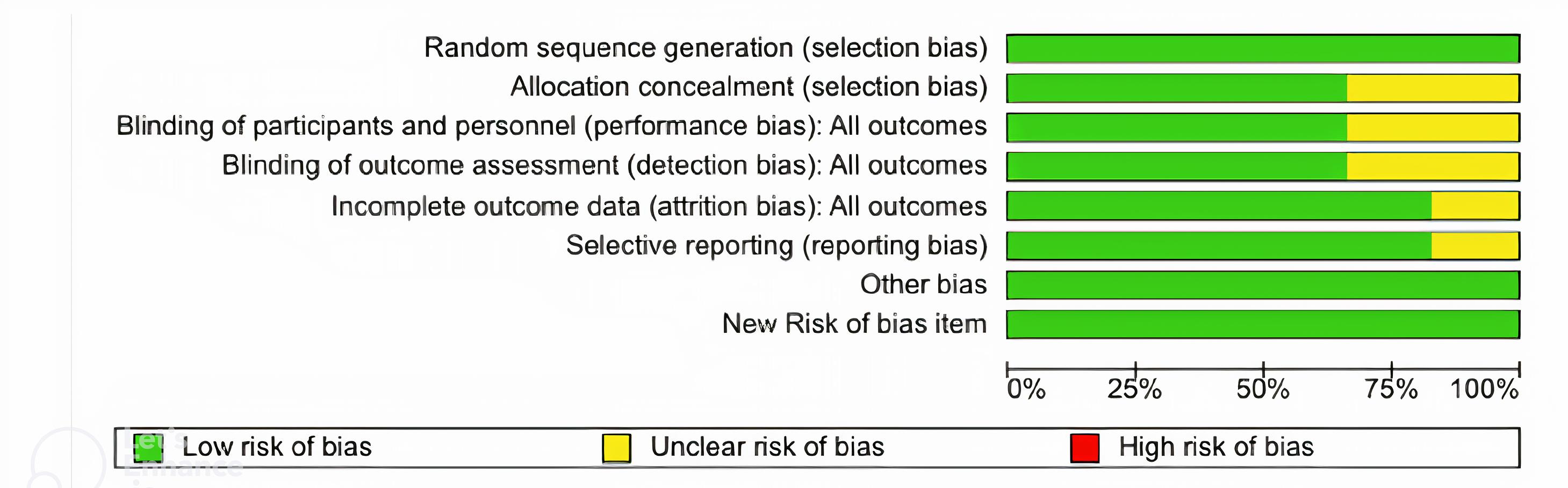
Figure 3.
Risk of Bias Graph
.
Risk of Bias Graph
Meta-analysis
To assess the clinical outcomes of resin-based and conventional pulp-capping materials in VPT, a meta-analysis was conducted using Jamovi 2.3.28 software (20-22).
Table 4 provides the results of meta-regression and regression coefficients. The Sidik–Jonkman model was applied based on standardized mean differences (SMD) to account for the high heterogeneity (I2 = 73.75%) observed among the studies. Statistical significance was set at P < 0.05. A random-effects model was chosen to accommodate variability in the effect sizes due to differences among study populations and methodologies. Heterogeneity was evaluated using the Higgins I2 test, and additional analyses, including forest plots, were employed to visually represent effect sizes and confidence intervals (23). Table 5 presents heterogeneity among the selected articles. A publication bias assessment was performed, the results of which are described in Table 6.
Table 4.
Meta-Regression and Regression Coefficients
|
|
Estimate
|
SE
|
Z
|
P
|
CI Lower Bound
|
CI Upper Bound
|
| Intercept |
-0.205 |
0.203 |
-1.01 |
0.312 |
-0.603 |
0.192 |
Note. SE: Standard error; Z: Z-score; P: P-value; CI: Confidence interval. Random effects model (k = 6)
Table 5.
Heterogeneity Statistics
|
Tau
|
Tau2
|
I2
|
H2
|
R2
|
df
|
Q
|
P
|
| 0.410 |
0.1679 (SE = 0.1068) |
73.73% |
3.809 |
|
5.000 |
32.360 |
< 0.001 |
Note. SE: Standard error; df: Degree of freedom. Tau2 estimator: Sidik–Jonkman.
Table 6.
Results of Publication Bias Assessment
|
Test Name
|
Value
|
P
|
| Fail-safe N |
10.000 |
0.004 |
| Begg and Mazumdar rank correlation |
-0.200 |
0.719 |
| Egger’s regression |
0.873 |
0.382 |
| Trim and Fill number of studies |
1.000 |
|
Note. Fail-safe N calculation using the Rosenthal approach.
Results
Search Results
Initially, 2864 articles were uploaded, and after removing 106 duplicate records, 2758 records remained for screening. Following the exclusion of 2470 articles based on some criteria (e.g., irrelevant topics or lack of meeting the inclusion criteria), 12 articles were identified as eligible. Of these, 12 articles were reviewed in detail, and after thorough examination, 6 articles were unanimously agreed upon for inclusion in the systematic review. The final review focused on RCTs comparing resin-based and conventional materials in VPT. Based on the findings (Table 1), the population demographics varied across the studies in terms of the sample size in each group and the type of teeth involved. Table 2 outlines the study characteristics, highlighting differences in treatment plans, interventions, and outcomes. The agreement between the two reviewers, as assessed by Cohen’s kappa, yielded a value of 0.82, indicating almost perfect or strong agreement. Table S1 provides a breakdown of the kappa statistics data, while Table S2 presents the contingency table illustrating the reviewers’ decisions.
Quality of Studies
The quality assessment, conducted using the RoB 2 tool, revealed that Study 5 had a moderate quality rating. Overall, the quality of the included studies ranged from mild to high. The risk of bias and quality assessment are presented in Figures 2 and 3. Most studies included in the meta-analysis were classified within the low-risk domain.
Meta-analysis Results
A systematic review of six studies was conducted, followed by a meta-analysis using all the included studies. The forest plot displays the meta-analysis of six studies assessing the treatment effect and clinical outcomes after one year. The individual study estimates, along with their 95% confidence intervals (CIs), show varying results, with some indicating positive effects and others demonstrating negligible or negative effects. The overall SMD was -0.2052 (95% CI: -0.6028 to 0.1924). The I2 value of 73.75% and a P value of < 0.001 suggest substantial heterogeneity among the studies, implying that the variability in effect sizes is due to differences among the studies. Figure 4 represents the forest plot created from the following outcomes.
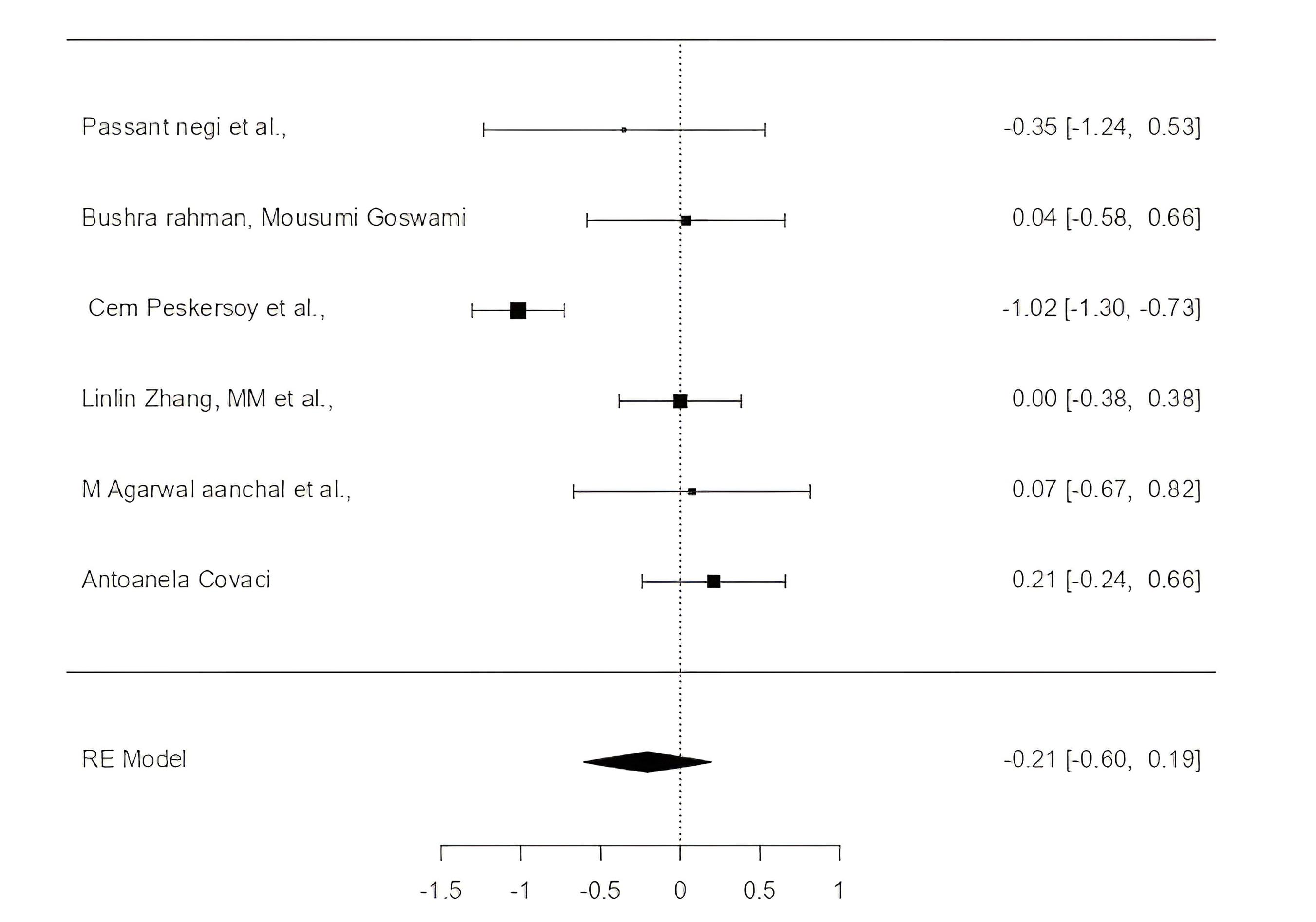
Figure 4.
Forest Plot Based on Standardized Mean Difference
.
Forest Plot Based on Standardized Mean Difference
Summary of Random Effects Model Analysis for Meta-Analysis
The random effects model (k = 6) shows an intercept estimate of -0.205 with no statistical significance (P = 0.312), and the 95% confidence interval (-0.603 to 0.192) suggests variability without a definitive effect as outlined in Table 4. This indicates no strong evidence of a consistent effect across the studies analyzed.
Heterogeneity Statistics for Random Effects Model
The analysis was performed using the SMD as the outcome measure, and a random-effects model was applied to the data. The heterogeneity (tau2) was estimated using the Sidik-Jonkman estimator (Sidik, 2005). The Q-test for heterogeneity (Cochran, 1954) and the I2 statistic were reported, along with the tau2 estimate. If heterogeneity was detected (i.e., tau2 > 0, regardless of the Q-test results), a prediction interval was also calculated for true outcomes. In addition, studentized residuals and Cook’s distances were used to assess the influence of individual studies. Studies with a studentized residual exceeding the 100 x (1 - 0.05/(2 X k))th percentile of a standard normal distribution were flagged as potential outliers (using a Bonferroni correction with two-sided alpha = 0.05 for k studies in the meta-analysis). Studies with a Cook’s distance greater than the median plus six times the interquartile range of the Cook’s distances were considered influential. Finally, both the rank correlation test and the regression test, with the standard error of the observed outcomes as the predictor, were employed to evaluate funnel plot asymmetry.
Forest Plot
A total of six studies (k = 6) were included in the analysis. The observed SMD ranged from -1.0161 to 0.2098, with the majority of estimates being negative (33%). The estimated average SMD based on the random-effects model was μ^ = −0.2052\hat{\mu} = -0.2052μ^ = −0.2052 (95% CI: -0.6028 to 0.1924), suggesting that the average outcome did not significantly differ from zero (z = -1.0116, P = 0.3117). The Q-test indicated significant heterogeneity in the true outcomes (Q (5) = 32.3602, P < 0.0001), with tau2 of 0.1679 and I2 of 73.75%. The 95% prediction interval for the true outcomes was from -1.1013 to 0.6908, implying that while the average outcome is negative, some studies may report positive true outcomes. An examination of the studentized residuals revealed that one study (11) had a value exceeding ± 2.6383, indicating that it may be a potential outlier. Based on Cook’s distances, the same study could be considered overly influential. However, neither the rank correlation test nor the regression test indicated any funnel plot asymmetry (P = 0.7194 and P = 0.3824, respectively). Figure 5 represents the funnel plot of meta-regression among the studies.
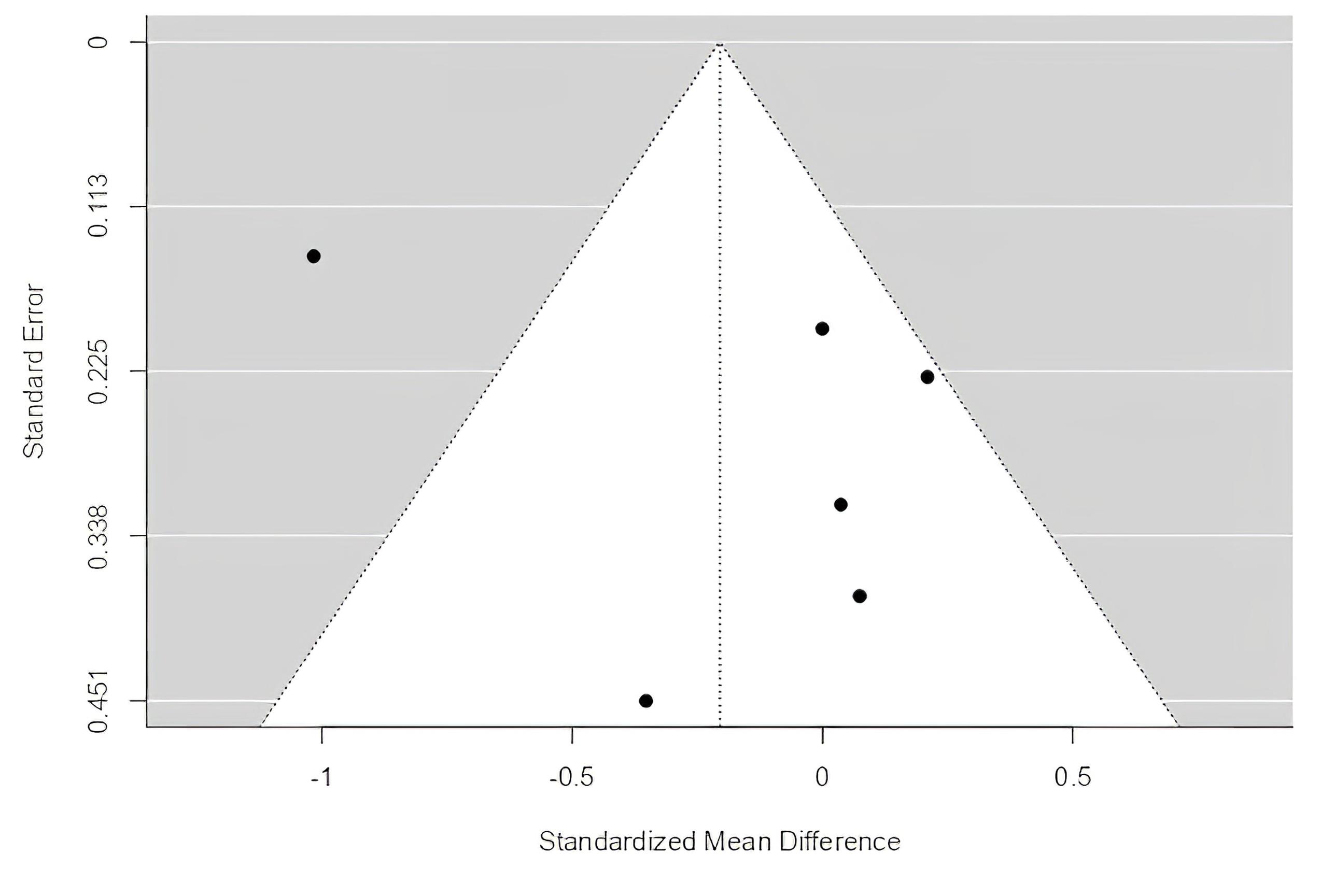
Figure 5.
Funnel Plot Created Under Estimated Standardized Mean Difference
.
Funnel Plot Created Under Estimated Standardized Mean Difference
Publication Bias Assessment
These indicators suggest that there is no substantial publication bias affecting this meta-regression. The results are likely reliable and not skewed due to selective reporting.
Meta-Regression
Funnel Plot
This meta-regression analysis revealed a statistically significant, moderate overall effect size across the studies, accompanied by substantial heterogeneity, demonstrating that factors at the study level play a significant role in the variation of outcomes. The absence of publication bias and the presence of significant heterogeneity highlight the importance of employing a meta-regression approach to better understand how specific study characteristics influence the effect size. The analysis confirms a non-zero effect and further supports the robustness of the findings.
Discussion
This review highlights new resin-based pulp-capping materials used in VPT and their performance in different treatment procedures. The findings of the current systematic review and meta-analysis indicated that conventional pulp-capping materials outperform resin-based pulp-capping materials in the long term within the field of VPT. Despite advancements in resin-based materials, their long-term efficacy remains a concern compared to traditional materials. The study discussed potential reasons behind the superior performance of conventional materials, such as better sealing ability and biocompatibility. Additionally, the review explored future research directions, including developing improved resin-based materials and more comprehensive clinical trials to validate their effectiveness. Conventional pulp-capping materials utilized in VPT (e.g., MTA, Biodentine, and calcium hydroxide preparations) have limitations in manipulation and setting durations, leading to the development of newer resin-based pulp-capping materials. Calcium hydroxide, regarded as the “Gold Standard” among pulp-capping materials, can cause a superficial area of necrosis within days of its application (24). Over the past two decades, MTA and tricalcium silicate cement-based materials have become staples in clinical dentistry, employed in various applications with several chemical composition upgrades. These materials interact with the oral environment during use, altering their microstructure and occasionally resulting in setting failures. The prolonged setting time of MTA allows unset MTA to contact other dental materials, impacting its hydration and setting process (25). Biodentine, on the other hand, is a valuable substitute for dentin despite its higher cost. It has a compressive strength of 297 MPa. The hardening of cementitious materials is driven by the crystallization process in a supersaturated solution. During the setting reaction of tricalcium silicate (3CaO·SiO₂), several components are involved, including unreacted cement particles, the formation of calcium silicate hydrate gel on particle surfaces, calcium hydroxide (Ca(OH)₂) within pore spaces, and the capillary voids that remain. These processes collectively contribute to the material’s final hardened structure, ensuring mechanical strength and stability. Biodentine used for pulpotomy facilitates uniform dentinal bridge formation and accelerates the pulpal healing response due to its bioactivity and sealing ability. Its properties create an ideal environment for rapid tissue repair and regeneration. (26). Resin-based materials, although not surpassing conventional materials, have emerged as viable alternatives. Numerous studies examining TheraCal LC have produced promising results, showcasing its easy manipulation, controlled setting time, comparable properties to MTA, and lower cost. TheraCal LC pulpotomy has demonstrated a survival success rate (both clinically and radiographically) similar to that of MTA pulpotomy in cariously exposed permanent teeth, both in the short (1 year) and long (5 years) terms, with a shorter chairside application time. The calcium ion release of TheraCal LC was lower than that of Biodentine, and the scarcity of calcium hydroxide in TheraCal LC after setting suggests that the released calcium ions are not in the hydroxide form. This provides a consistent protective lining, making it suitable for reparative dentine formation. Its apatite-forming ability promotes dentine repair and mineralization (27). Calcimol LC, another resin-based material, offers effective pulp protection. It is a ready-to-use, one-component material that allows for time-saving light curing and can be directly applied from the non-dripping technology syringe. Calcimol LC has high acid resistance, provides protection during the total-etch technique, and supports the formation of tertiary dentine. However, Calcimol LC has shown higher cytotoxicity to MDPC-23 cells compared to a resin-free calcium hydroxide paste. Nonetheless, the composite resin is considered to have mild to no toxic effects on odontoblast-like MDPC-23 cells if properly polymerized (28). Other studies indicated that resin-modified calcium hydroxide is not more cytotoxic than control calcium hydroxide. When sufficiently cured with a longer curing time, the cytotoxic effects of the resin disappear, although during polymerization, OH− is released and can cause some cytotoxicity. ERRM revealed minimal cytotoxicity in the first two days, with high cell viability observed at days five, seven, and eight, possibly due to the lack of toxicant leakage from the set material in some in vitro studies. ERRM features nanosphere particles in a putty form with a maximum diameter of 1 × 10 µm, allowing the material to enter dentinal tubules, moisten with dentin liquid, and create a mechanical bond upon setting. It bonds to adjacent dentin without shrinkage and is highly biocompatible, hydrophilic, radiopaque, and antibacterial. The iRoot BP Plus, also known as ERRM putty, is a biocompatible material with an apatite-forming ability that enhances dentinal bridge formation on human dental pulp cells and other variant human cells in both in vitro and in vivo studies, without any severe complications (29). It is notable that the VPT procedure with iRoot BP plus takes a longer duration because it has a longer setting time compared to TheraCal LC, and the involved pulp in VPT using iRoot BP plus has a moderate inflammatory response until it is completely set. However, these studies were conducted under controlled and ideal conditions, with healthy, caries-free pulp tissue, synthetically made materials, limited time, and small sample sizes. Further clinical studies should focus on pulpitis cases to obtain more comprehensive and accurate results related to clinical conditions. The newer resin-containing pulp-capping materials, including photo-initiators, fillers, and constituents generated during the setting process, release substances, particularly shortly after setting. The amount of released substances varies by brand, with higher chemical conversion resulting in lower release of leachables. Larger base monomers (e.g., Bis-GMA and UDMA) are less likely to be released due to their low water solubility. In contrast, smaller additive monomers (e.g., hydroxyethyl methacrylate and triethylene glycol dimethacrylate) can diffuse through the filling. Insufficient photocuring of thick composite layers can result in incomplete polymer conversion, promoting monomer release. Additionally, post-setting hydrolytic degradation of the adhesive and composite by enzymes (esterase or lipase) can produce deterioration products that might be cytotoxic (30).
To the best of our knowledge, this is the first systematic review with meta-analysis elucidating the comparison between traditional pulp-capping materials and newer resin-based pulp-capping materials. The provided evidence must be cautiously dealt with given the following limitations. The quality of the studies may have variations in the study design, methodology, and sample sizes, affecting the reliability and generalizability of the findings. Factors such as the operator’s skill, variations in treatment protocols, and differences in patient compliance could influence the treatment outcomes. Moreover, the selected resin-based materials are newer to the dental market, limiting the availability of long-term clinical data on their performances and outcomes.
Conclusion
The findings of this study confirmed that the use of MTA and Biodentine in VPT is an effective treatment for caries-exposed permanent teeth. However, the limitations of traditional pulp-capping materials have driven the development of new resin-based pulp-capping materials, which aim to improve handling properties and treatment outcomes. Future research focusing on overcoming the current shortcomings of resin-based pulp-capping materials may significantly enhance the preservation of pulpal vitality.
Competing Interests
None declared.
Ethical Approval
Not applicable.
Funding
The authors declare that no funding was received from any public, private, or commercial organizations to support this systematic review and meta-analysis.
Supplementary Files
Supplementary file 1 contains Table S1 and S2.
(pdf)
References
- Juang J, Song C, Pryles RL, Blicher B. Vital pulp therapy: managing deep caries in the permanent dentition. Compend Contin Educ Dent 2024; 45(6):301-4. [ Google Scholar]
- Zhang L, Yin L, Wu J, Wang X, Huang J, Li Q. Clinical influencing factors of vital pulp therapy on pulpitis permanent teeth with 2 calcium silicate-based materials: a randomized clinical trial. Medicine (Baltimore) 2024; 103(18):e38015. doi: 10.1097/md.0000000000038015 [Crossref] [ Google Scholar]
- Aguilar P, Linsuwanont P. Vital pulp therapy in vital permanent teeth with cariously exposed pulp: a systematic review. J Endod 2011; 37(5):581-7. doi: 10.1016/j.joen.2010.12.004 [Crossref] [ Google Scholar]
- Duncan HF. Present status and future directions-vital pulp treatment and pulp preservation strategies. Int Endod J 2022; 55(Suppl 3):497-511. doi: 10.1111/iej.13688 [Crossref] [ Google Scholar]
- Covaci A, Ciocan LT, Gălbinașu B, Bucur MV, Matei M, Didilescu AC. Dental pulp response to different types of calcium-based materials applied in deep carious lesion treatment-a clinical study. J Funct Biomater 2022; 13(2):51. doi: 10.3390/jfb13020051 [Crossref] [ Google Scholar]
- Rahman B, Goswami M. Comparative evaluation of indirect pulp therapy in young permanent teeth using Biodentine and TheraCal: a randomized clinical trial. J Clin Pediatr Dent 2021; 45(3):158-64. doi: 10.17796/1053-4625-45.3.3 [Crossref] [ Google Scholar]
- Nagi P, Marzaban NN, Elkhadem A. Effectiveness of TheraCal LC versus MTA in vital pulp therapy of cariously-exposed young permanent molars: five-year follow up of a randomised clinical trial. Alex Dent J 2024; 49(1):170-80. doi: 10.21608/adjalexu.2024.260039.1459 [Crossref] [ Google Scholar]
- Gandolfi MG, Prati C. MTA and MTAs-like biomaterials: properties, clinical applications, and drawbacks. Dent Mater J 2010; 29(4):361-73. [ Google Scholar]
- Aanchal MA, Shenoy VU, Sumanthini VM, Tanvi SS. Comparative evaluation of resin-modified glass ionomer cement, mineral trioxide aggregate, and calcium hydroxide when used as a direct pulp capping material on carious pulp exposures of human permanent teeth: a randomized clinical trial. World J Dent 2021; 12(5):381-5. doi: 10.5005/jp-journals-10015-1862 [Crossref] [ Google Scholar]
- Doranala S, Surakanti JR, Vemisetty H, Loka SR, Sudireddy K, Punna R. Comparative assessment of titanium-prepared platelet-rich fibrin, EndoSequence root repair material, and calcium hydroxide as pulpotomy agents in permanent teeth with irreversible pulpitis: a randomized controlled trial. J Conserv Dent 2021; 24(6):606-10. doi: 10.4103/jcd.jcd_264_21 [Crossref] [ Google Scholar]
- Peskersoy C, Lukarcanin J, Turkun M. Efficacy of different calcium silicate materials as pulp-capping agents: randomized clinical trial. J Dent Sci 2021; 16(2):723-31. doi: 10.1016/j.jds.2020.08.016 [Crossref] [ Google Scholar]
- McHugh ML. Interrater reliability: the kappa statistic. Biochem Med (Zagreb) 2012; 22(3):276-82. [ Google Scholar]
- Cho SY, Park S, Shin Y, Jung IY. Randomized clinical trial of pulpotomy using a premixed injectable calcium silicate cement on mature permanent teeth with reversible pulpitis. Sci Rep 2024; 14(1):2994. doi: 10.1038/s41598-024-52818-6 [Crossref] [ Google Scholar]
- Bayoumy EH, Abi Elhassan MH, Al-Zohairy AA, Al-Awady BA. Clinical and microbiological evaluation of calcium silicate versus calcium hydroxide in two-step indirect pulp treatment: a randomized clinical trial. J Int Oral Health 2021; 13(1):1-9. doi: 10.4103/jioh.jioh_33_20 [Crossref] [ Google Scholar]
- Kang CM, Sun Y, Song JS, Pang NS, Roh BD, Lee CY. A randomized controlled trial of various MTA materials for partial pulpotomy in permanent teeth. J Dent 2017; 60:8-13. doi: 10.1016/j.jdent.2016.07.015 [Crossref] [ Google Scholar]
- Bhatt RA, Patel MC, Bhatt R, Patel C, Joshi KR, Makwani D. A comparative evaluation of light cure calcium silicate and resin-modified glass ionomer as indirect pulp capping agent in primary molars: a randomized clinical trial. Dent Res J (Isfahan) 2023; 20:18. doi: 10.4103/1735-3327.369620 [Crossref] [ Google Scholar]
- Yazdanfar I, Barekatain M, Zare Jahromi M. Combination effects of diode laser and resin-modified tricalcium silicate on direct pulp capping treatment of caries exposures in permanent teeth: a randomized clinical trial. Lasers Med Sci 2020; 35(8):1849-55. doi: 10.1007/s10103-020-03052-9 [Crossref] [ Google Scholar]
- Doranala S, Surakanti JR, Vemisetty H, Loka SR, Sudireddy K, Punna R. Comparative assessment of titanium-prepared platelet-rich fibrin, EndoSequence root repair material, and calcium hydroxide as pulpotomy agents in permanent teeth with irreversible pulpitis: a randomized controlled trial. J Conserv Dent 2021; 24(6):606-10. doi: 10.4103/jcd.jcd_264_21 [Crossref] [ Google Scholar]
- Flemyng E, Dwan K, Moore TH, Page MJ, Higgins JP. Risk of bias 2 in Cochrane reviews: a phased approach for the introduction of new methodology. Cochrane Database Syst Rev 2020; 10(11):ED000148. doi: 10.1002/14651858.Ed000148 [Crossref] [ Google Scholar]
- Jamovi P. Jamovi (Version 2.3). [Computer Software] [Internet]. 2022.
- R Core Team. R: A Language and Environment for Statistical Computing. 2021. (Version 4.1) [Computer software]. Retrieved from: https://cran.r-project.org.
- Lakens D. Equivalence tests: a practical primer for t tests, correlations, and meta-analyses. Soc Psychol Personal Sci 2017; 8(4):355-62. doi: 10.1177/1948550617697177 [Crossref] [ Google Scholar]
- Higgins JP, Thompson SG. Quantifying heterogeneity in a meta-analysis. Stat Med 2002; 21(11):1539-58. doi: 10.1002/sim.1186 [Crossref] [ Google Scholar]
- Schuurs AH, Gruythuysen RJ, Wesselink PR. Pulp capping with adhesive resin-based composite vs calcium hydroxide: a review. Endod Dent Traumatol 2000; 16(6):240-50. doi: 10.1034/j.1600-9657.2000.016006240.x [Crossref] [ Google Scholar]
- Camilleri J. Mineral trioxide aggregate: present and future developments. Endod Topics 2015; 32(1):31-46. doi: 10.1111/etp.12073 [Crossref] [ Google Scholar]
- Singh H, Kaur M, Markan S, Kapoor P. Biodentine: a promising dentin substitute. JBR J Interdiscip Med Dent Sci 2014; 2(5):140. doi: 10.4172/2376-032x.1000140 [Crossref] [ Google Scholar]
- Arandi NZ, Rabi T. TheraCal LC: from biochemical and bioactive properties to clinical applications. Int J Dent 2018; 2018:3484653. doi: 10.1155/2018/3484653 [Crossref] [ Google Scholar]
- Ranjbar Omrani L, Moradi Z, Abbasi M, Kharazifard MJ, Tabatabaei SN. Evaluation of compressive strength of several pulp capping materials. J Dent (Shiraz) 2021; 22(1):41-7. doi: 10.30476/dentjods.2020.83964.1063 [Crossref] [ Google Scholar]
- Mahgoub N, Alqadasi B, Aldhorae K, Assiry A, Altawili ZM, Tao H. Comparison between iRoot BP Plus (EndoSequence Root Repair Material) and mineral trioxide aggregate as pulp-capping agents: a systematic review. J Int Soc Prev Community Dent 2019; 9(6):542-52. doi: 10.4103/jispcd.JISPCD_249_19 [Crossref] [ Google Scholar]
- Hanna SN, Perez Alfayate R, Prichard J. Vital pulp therapy an insight over the available literature and future expectations. Eur Endod J 2020; 5(1):46-53. doi: 10.14744/eej.2019.44154 [Crossref] [ Google Scholar]