Avicenna J Dent Res. 17(3):130-136.
doi: 10.34172/ajdr.1838
Original Article
Evaluation of the Effects of Pure Extracts of Licorice, Sage, and Grape Seeds on Streptococcus mutans and Enamel Remineralization: An Experimental Study
Fatemeh Ahmadi-Motamayel Conceptualization, Data curation, Supervision, Writing – original draft, Writing – review & editing, 1 
Erfan Akbari Funding acquisition, Investigation, Software, Writing – review & editing, 2
Amin Doosti-Irani Formal analysis, Validation, Writing – review & editing, 3
Dara Dastan Methodology, Project administration, Writing – review & editing, 4
Mohammadreza Arabestani Data curation, Methodology, Project administration, Writing – review & editing, 5
Fereshteh Najar-Karimi Investigation, Visualization, Writing – original draft, Writing – review & editing, 6, *
Author information:
1Dental Research Center, Department of Oral Medicine, School of Dentistry, Hamadan University of Medical Sciences, Hamadan, Iran
2General Dentist, Hamedan, Iran
3Department of Epidemiology, School of Public Health and Research Center for Health Sciences, Hamadan University of Medical Sciences, Hamadan, Iran
4Department of Pharmacognosy, School of Pharmacy, Medicinal Plants and Natural Products Research Center, Hamadan University of Medical Sciences, Hamadan, Iran
5Department of Microbiology, School of Medicine, Nutrition Health Research Center, Institute of Health Sciences and Technology, Hamadan University of Medical Sciences, Hamadan, Iran
6Dental Science Research Center, Department of Oral and Maxillofacial Medicine, Faculty of Dentistry, Guilan University of Medical Sciences, Rasht, Iran
Abstract
Background: Many plants and natural products have strong antimicrobial activity in addition to their side effects. The present study evaluated the antibacterial effects of plant extracts of licorice, sage, and grape seeds on the proliferation of Streptococcus mutans and enamel remineralization.
Methods: After preparing the plant extracts, first, the antibacterial effect of each extract on S. mutans growth and proliferation was evaluated. Then, 128 teeth with intact cusps were selected, prepared, and placed in a demineralizing solution for 10 weeks. Subsequently, their surface microhardness was determined. Finally, teeth were subjected to a pH cycling procedure for 14 days after they were randomly assigned to the plant extract groups, and their surface microhardness underwent re-evaluation. Statistical analyses were conducted using Stata 14 at a 95% confidence interval.
Results: All the studied plant extracts exhibited antimicrobial effects on S. mutans and increased the surface microhardness of the teeth. Generally, the differences in microhardness in each group and between the study groups were significant (P<0.001).
Conclusion: Overall, all the plant extracts had antibacterial effects on S. mutans and assisted in remineralizing dental caries by inhibiting this bacterial species.
Keywords: Grape seed extract, Glycyrrhiza, Salvia officinalis, Streptococcus mutans, Tooth remineralization
Copyright and License Information
© 2025 The Author(s); Published by Hamadan University of Medical Sciences.
This is an open-access article distributed under the terms of the Creative Commons Attribution License (
http://creativecommons.org/licenses/by/4.0), which permits unrestricted use, distribution, and reproduction in any medium provided the original work is properly cited.
Please cite this article as follows: Ahmadi-Motamayel F, Abkari E, Doosti-Irani A, Dastan D, Arabestani M, Najar-Karimi F. Evaluation of the effects of pure extracts of licorice, sage, and grape seeds on Streptococcus mutans and enamel remineralization: an experimental study. Avicenna J Dent Res. 2025;17(3):130-136. doi:10.34172/ajdr.1838
Background
Dental caries is a multifactorial disease that results from the periodic demineralization and remineralization of tooth hard tissues. It can be prevented in its early stages and reversed. It has also been mentioned that Streptococcus mutans plays a major role in both the initiation and progression of caries through features such as acidogenesis, the ability to produce glucosyltransferases, the synthesis of extracellular polysaccharides, and the facilitation of bacterial adhesion and accumulation (1,2).
In treating incipient enamel caries, it has been attempted to apply noninvasive treatments with remineralization strategies, including the use of mouthwashes, fluoride-containing toothpaste, and the like (3). Considering the side effects of chemical agents, using herbal medicines in dentistry has attracted attention for improving oral hygiene and orodental diseases (4).
Licorice has potential advantages in treating orodental diseases due to its antimicrobial properties attributed to its metabolites, including phenols and flavonoids (4). Salvia officinalis (sage) is a medicinal plant rich in bioactive agents, such as flavonoids, which can be used as an antibiotic and anti-plaque agent in treating periodontal diseases (5). The grape seed extract contains ingredients, such as proanthocyanidin, tannin, and polyphenol. This extract has significant antibacterial and therapeutic effects and can chelate calcium ions, increase the precipitation of minerals, and accelerate remineralization due to the presence of proanthocyanidin in its composition (6,7).
Considering the results of previous studies on the effects of herbal extracts in different fields, including their anti-cariogenic effects and the ability to remineralize, the present study investigated the effect of the pure extracts of licorice, sage, and grape seeds on Streptococcus mutans and enamel remineralization. It should be noted that the present research was conducted since, to the best of our knowledge, there are insufficient studies on the antimicrobial effects against S. mutans and the remineralization effects of the combination of these extracts. Further, there is a noticeable difference in the minimum inhibitory concentration (MIC) and minimum bactericidal concentration (MBC) values obtained for each of the above extracts against S. mutans.
Materials and Methods
The present experimental study was performed in microbial and remineralization stages in December–March 2020. To prepare the extracts of licorice, sage, and grape seed, the grape seeds, roots of licorice, and the upper parts of sage were procured from a medicinal plant store in Hamadan and confirmed by a specialist. Then, the seeds, roots, and upper parts of the plants were dried and powdered to extract the hydroalcoholic extract. The extraction procedure was conducted using the maceration method in a shaker. The solution containing the plant and solvent was filtered through the Whatman paper filter, No.1, No.2 and microbial filters. Finally, the extract was concentrated in a rotary evaporator under vacuum at 45 ºC and stored at 4 ºC in a dark environment until the mouth rinse was prepared (8). Then, 10 L of each extract was prepared and stored until use, containing 28 mg of sage and licorice extracts, 50 mg of the grape seed in 240 mL of distilled water (9,10), and 2.5 mg of benzalkonium as a preservative.
Microbial Phase
After culturing S. mutans for 24 hours, a 0.5 McFarland concentration of its suspension was prepared and cultured on Mueller-Hinton agar plates (containing sheep blood) using a Pasteur welling pipette. Then, the three extracts were added to the wells, and the plates were placed under a candle jar at 37 ºC under 5%-10% CO2. After 48 hours, no proliferation zone was evaluated for each well. Vancomycin was used as a positive control. For the MIC and MBC tests, standard S. mutans bacterial species (ATCC35668) was cultured, and a 0.5 McFarland suspension was prepared. Next, the suspension was diluted to 1:200. Subsequently, 100 µL of Mueller-Hinton broth was added to the wells of a 96-well plate. To evaluate licorice, 100 µL of the licorice extract was added to the first well, dilution was performed up to well #11, and well #12 was considered a positive control. Subsequently, 100 µL of the 1:200 diluted suspension of the bacteria was added to each well of the 12-well series. Finally, the plate was incubated and placed under a candle jar at 37 ºC under 5%-10% CO2. After 24-48 hours, the wells were used to prepare cultures. The minimum concentration of the material at which no turbidity was observed was considered the MIC. In addition, the minimum concentration of the extract that prevented the growth of 99.9% of the bacteria was considered the MBC (11). The above steps were repeated for sage and grape seed extracts.
Remineralization
Inclusions criteria: A total of 128 sound human premolar teeth extracted for orthodontic treatment were selected for examination. The teeth had sound crowns and had no caries, restorations, hypoplasia, decalcified areas, fractures, enamel cracks, and white or discolored spots. They were stored in the normal saliva solution at room temperature until all the samples were collected.
Exclusion criteria: Samples with caries, cracks, and enamel problems were excluded from the investigation.
First, the samples were immersed in a 0.1% thymol solution for disinfection at room temperature for two months. Surface contaminations of the samples were removed with a #15 scalpel blade and a brush in a handpiece. Next, the teeth were immersed in 0.2% chlorhexidine (CHX) mouthwash for 60 seconds. The tooth samples were stored in distilled water at room temperature during the study period. The distilled water was replaced weekly to prevent microbial contamination of the samples.
Then, the teeth were mounted, and a cutting disk was used to cut the teeth first mesiodistally and then at the Cemento Enamel Junction. The teeth were also divided into two buccal and lingual halves in a mesiodistal direction and embedded in orthodontic resin (12). The labial and lingual surfaces were smoothened, polished, and cleaned using distilled water (13). Subsequently, they were observed under a microscope to rule out cracks and enamel defects. Afterward, the samples were immersed in a demineralizing solution (consisting of 2 mM of calcium chloride, 2 mM of monosodium phosphate, and 50 mM of acetic acid with a pH rate of 4.8) for 10 weeks (14). Then, the samples’ microhardness was determined, and the samples were randomly assigned to four groups of 32 (including the control group). The sample size (32 in each of the four groups, a total of 128 samples) was determined based on a similar study (12) using the sample size formula to compare two means at α = 0.05 and 90% power. The samples in each group were immersed in licorice, sage, or grape seed extracts and distilled water (the control group) four times a day, each lasting 20 minutes. This procedure was repeated for 14 days. During this period, the samples were maintained in freshly prepared artificial saliva (pH = 7.2) that was refreshed every 24 hours to preserve ionic exchange and pH. Finally, surface microhardness was analyzed in the samples of all groups after 48 hours by indentation using a diamond indenter (by creating three indents 50 µm apart at the center of the exposed window) with a 300-g force for 15 seconds. The created cross-section was measured using the following formula at three points at 500, 1000, and 1500 µm distances from the center of the enamel surface, and their mean was reported at the mean microhardness value of each sample in kgf/mm2. Two samples from each group underwent scanning electron microscopy (SEM) analysis.
Scanning Electron Microscopy Analysis With Energy Dispersive X-Ray Analysis
Two samples were selected from each group for SEM preparation and sputter-coated with gold after cleaning with distilled water and drying. Then, morphological changes on the enamel surface (including depressions and evaluations resulting from demineralization and remineralization on the enamel surface) were evaluated under an electron microscope (15,16).
Data Analysis
Microbial phase: The results were reported as means and standard deviations. One-way analysis of variance (ANOVA) was used to evaluate the means of bacterial growth inhibition zones at different concentrations of sage, licorice, and grape seed extracts. The data were analyzed with Stata 14 at a significance level of P < 0.05.
Remineralization phase: The effects of the three extracts were independently determined in comparison to the control group (distilled water), and the results were then compared using indirect statistical methods.
An independent t test and ANOVA were utilized to compare quantitative variables. In addition, the chi-square test was employed to compare nominal variables. Finally, the data underwent analysis with Stata 14 at a confidence interval of 95%.
Results
First, MIC/MBC tests were performed to evaluate the effects of the mouthwashes on S. mutans in the laboratory.
Table 1 presents the antibacterial (MIC) and bactericidal (MBC) effects and growth inhibition zone of licorice, sage, and grape seed extracts and their two-by-two combinations on S. mutans.
Table 1.
Antibacterial Activity of Mouthwashes on Streptococcus mutans Compared to Vancomycin (Control)*
|
Variable
|
MIC (mg/mL)
|
MBC (mg/mL)
|
Inhibition Zone Diameter Distributions (mm)
|
|
Salvia officinalis (Sage) |
4 |
8 |
13 |
|
Glycyrrhiza glabra (Licorice)* |
1 |
2 |
15 |
| Grape seed |
64 |
128 |
11 |
| Grape seed + Salvia officinalis |
4 |
8 |
12 |
| Grape seed + Glycyrrhiza glabra |
0.5 |
1 |
15 < |
|
Salvia officinalis + Glycyrrhiza glabra |
0.5 |
1 |
17 |
| Vancomycin |
4 (µg/mL) |
8 (µg/mL) |
27 |
Note. MIC: Minimum inhibitory concentration; MBC: Minimum bactericidal concentration. *All mg/mL except for vancomycin (µg/mL).
According to the MBC and MIC of the mouthwashes, lower MIC indicates the higher antibacterial effect of the material:
Vancomycin > licorice + sage = licorice + grape seed > sage + grape seed extract = sage > grape seed extract
According to MIC:
Vancomycin > age + licorice > grape seed extract + licorice > licorice > sage > grape seed extract + sage > grape seed extract
According to the results (Table 2), differences in the surface microhardness of each study group were significant in a general comparison of the groups.
Table 2.
Enamel Microhardness in Each Study Group
|
Group
|
Hardness
|
P
Value
|
|
Mean
|
Standard Deviation
|
|
Salvia officinalis
|
345.59 |
28.65 |
< 0.001 |
| Grape seed |
411.96 |
18.52 |
| Control |
300.81 |
18.92 |
|
Glycyrrhiza glabra
|
401.43 |
18.17 |
Note. Kruskal-Wallis equality-of-populations rank test.
The two-by-two comparisons of the groups demonstrated significantly lower surface microhardness in the sage group than in the grape seed, licorice, and control groups (P = 0.00, Table 3). However, enamel surface microhardness in the licorice and grape seed tract groups was not significantly different (P = 0.21). However, it was slightly higher in the grape seed extract group than in the licorice group.
Table 3.
A Pair-Wise Comparison of the Study Groups in Terms of Enamel Microhardness
|
Groups
|
|
Salvia officinalis
|
Grape Seed
|
Control
|
| Grape seed |
Difference |
-4.11 |
|
|
|
P value |
0.00 |
| Control |
Difference |
2.54 |
6.66 |
|
|
P value |
0.00 |
0.00 |
|
Glycyrrhiza glabra
|
Difference |
-3.33 |
0.77 |
-5.88 |
|
P-value |
0.00 |
0.21 |
0.00 |
Considering the large number of samples and the high cost of determining the concentration of surface elements (carbon, oxygen, sodium, magnesium, silicon, phosphorus, and calcium) through SEM analysis for each sample, only the surface elements of two samples in each group were determined in the present study. The results revealed no significant differences in any of the study groups in the surface element concentrations (Figure 1). It should be noted that a small number of samples were evaluated in each group, and some values (e.g., concerning calcium, phosphorus, and silicon with P values of 0.07, 0.08, and 0.07, respectively) were close to the level of significance (P = 0.05). Thus, if a large sample size had been used to investigate surface elements in this study, the differences in some elements between some groups might have been significant (SEM images in each group for two samples from low magnification to high magnification are attached in Figures S1–S4).
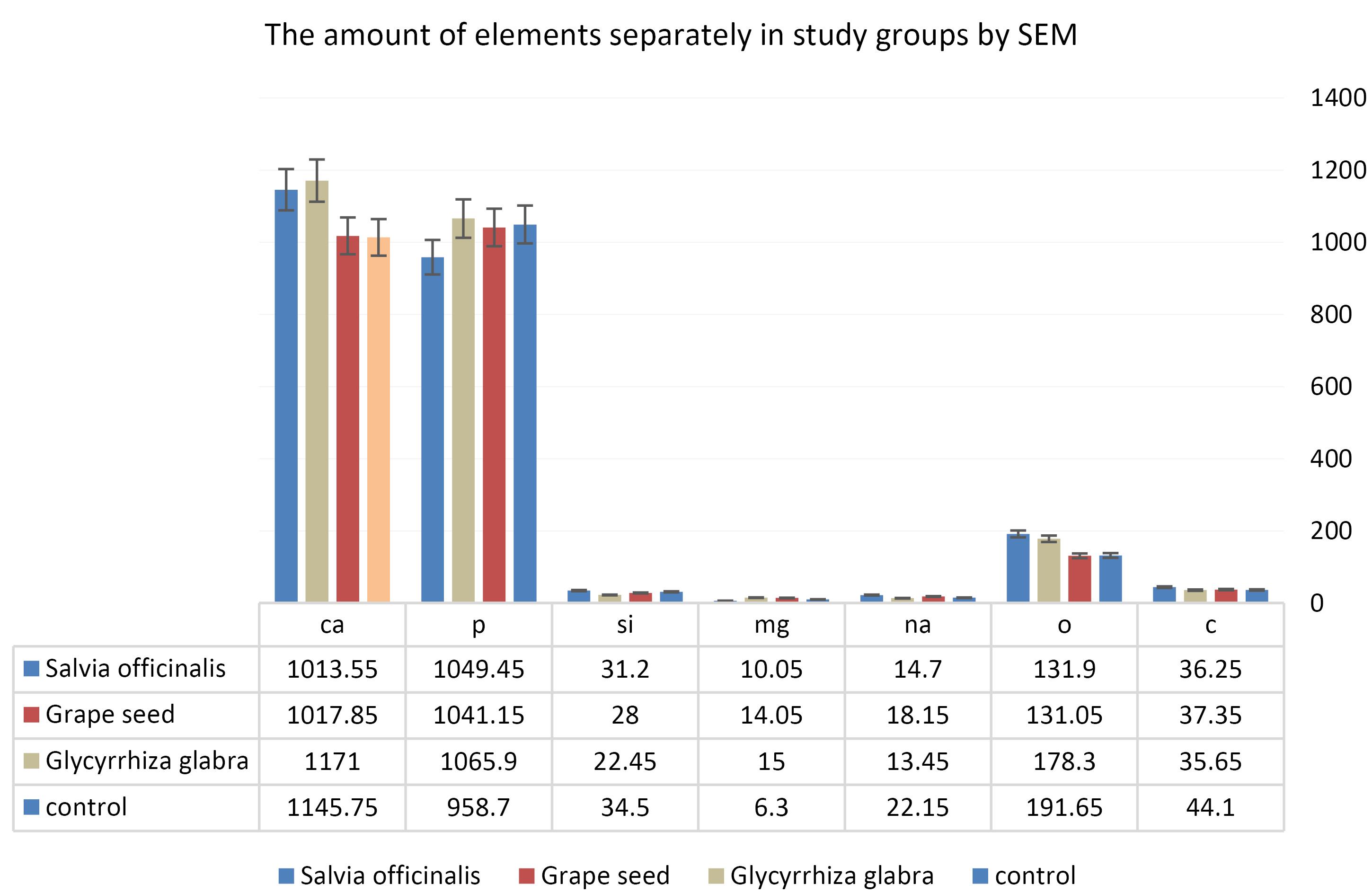
Figure 1.
The Mean Values of the Surface Elements Evaluated in Each Study Group Based on Scanning Electron Microscopy
.
The Mean Values of the Surface Elements Evaluated in Each Study Group Based on Scanning Electron Microscopy
Discussion
Incipient enamel carious lesions can be treated using noninvasive treatments and mineralization strategies (3). In recent years, interest in natural products to prevent diseases has significantly increased in dentistry due to their safety, fewer side effects, and better availability (17). However, a few studies have evaluated the effects of plant extracts on cariogenic bacteria and remineralization (17-19).
As mentioned earlier, the present study evaluated the impacts of the pure extracts of licorice, sage, and grape seeds on S. mutans and enamel remineralization. The well diffusion and broth dilution techniques were used to investigate the antimicrobial effects of the study materials because the confounding factors affecting the well diffusion technique (e.g., solubility and the diffusion of the antimicrobial agent through agar) are more extensive than those influencing the broth dilution technique (20). In our study, antimicrobial effects were observed against S. mutansin all the study groups. The highest (second to vancomycin) and lowest growth inhibition zones were observed in the licorice + sage (17 mm) and grape seed extract (11 mm) groups, respectively. The highest antimicrobial effect according to MIC/MBC was observed in the licorice + sage and licorice + grape seed groups (MIC = 0.5), while the lowest antimicrobial effect was found in the grape seed extract group (MIC = 64).
Krishnakumar et al reported that the licorice extract effectively decreased S. mutans counts but had no remineralizing effect on the enamel surface (21). The antimicrobial findings of the above study are consistent with those of the present study. However, the difference in the effect of remineralization by licorice between these two studies might be attributed to the frequency and duration of its candy use or the concentration of the active ingredients in the extract prepared from this plant. It has been found that the mean time of remineralization after exposure to the acid is at least 14 days; however, in the above study, the candy was used for 10 days (22). In addition, due to the specific taste of licorice, some children avoided using it for 10 days, which might have affected the results. Further, Yosef et al concluded that the use of licorice root aqueous extract as a mouthwash, in addition to increasing the salivary pH, was effective in reducing the number of oral S. mutans and was even more effective than CHX (23).
On the other hand, unlike the present study, Almaz et al observed no significant decrease in S. mutanscounts. However, the extent of the decrease in S. mutans counts in the high-risk group was higher than in the caries-free group (24). Differences in the duration of the study, the sample size, and the study procedures might account for contradictions in the results.
The bioactive flavonoid compounds (one of the important ingredients of all three plants) can cause remineralization by increasing access to calcium and phosphorus ions in the saliva (18). In addition, these compounds exert their anticariogenic effects by inhibiting bacterial growth (25). Further, some ingredients of licorice (e.g., glycyrrhizin) can increase salivation and remineralization rates due to their specific taste (19). Similarly, Pooja et al pointed out the remineralizing effect of the licorice extract on primary caries lesions of enamel by observing confocal images (26).
Feride et al, studying the effect of adding the glycyrrhizic acid of licorice to amorphous calcium phosphate (CPP-ACP) on its antibacterial and remineralization activity in 10 days, observed that it increased the antibacterial and remineralization activity, which was not statistically significant. On the other hand, both the aqueous and alcoholic extracts of licorice had antibacterial effects; however, they found that a higher effect of the alcoholic extract of licorice root on bacterial inhibition than its aqueous extract might be attributed to the higher solubility of the licorice component in alcohol or the presence of alcohol (27).
It has been reported that carbohydroxy terpenes (derivatives of all three studied plants) also have antibacterial activity against S. mutans (28).
The MIC of glycyrrhizic acid in an in vitro study by Liu et al was 1.57 mg/mL, which is close to the MIC value (the MIC of licorice = 1) in the present study. According to the results of the present study, an increase in the glycyrrhizic acid concentration was associated with an increase in its antibacterial effects (29). In addition, it has been shown that phenolic compounds (the important ingredients of glycyrrhizic acid of the three studied plants) have inhibitory effects on S. mutans growth through a direct antibacterial effect and prevention of bacterial cell adhesion to the tooth surface and a preventive impact on demineralization by inhibiting enzymes, such as amylase (30). Haider et al highlighted that the extract of Salvia officinalis, especially its methanolic extract, is even more effective than CHX in reducing S. mutans (31).
Jawale et al concluded that the grape seed extract had remineralizing effects (32). However, there is a limited body of research on the effect of the sage extract on remineralization.
Mirkarimi et al, investigating the effect of the grape seed extract (by determining MIC/MBC), found that S. mutans had no inhibitor effect (33). However, Swadas et al reported that the MIC of the grape seed extract was 125 mg/mL (7), almost similar to the present study results. Castellanos et al concluded that proanthocyanidins, as active components in grape seed extract, can prevent the adhesion, cohesion, and accumulation of proteins in S. mutans by preventing the formation of insoluble polysaccharides in the extracellular matrix (34).
The differences in the MIC/MBC concentrations of the plant extracts in different studies might be attributed to various reasons, including the type of the prepared extract (ethanolic or hydroalcoholic), differences in the part of the plant used to prepare the extract (flower, stem, and leaf), the geographic conditions of the plant’s growth, the accuracy of the test, and prevention of confounding factors. Based on the findings of the present study, the antibacterial effect of sage + licorice was higher than that of each extract alone. In addition, the antibacterial impact of the licorice + grape seed extract was higher than that of each extract alone. However, the influence of a combination of sage and grape seed extract was higher than that of the grape seed extract but equal to that of the sage extract alone. At the microscopic level (using SEM), the surface roughness can be evaluated by quantitative measurement of minerals such as calcium (35). In the present study, although there were significant differences in the concentration of mineral agents in the study group samples compared to the control group (P < 0.05), in general, the maximum calcium concentration was recorded in the licorice group.
Limitations and Suggestions
One of the limitations of the present study was the evaluation of surface elements in only two samples from each study group due to the high cost of determining the concentrations of surface elements through SEM. Therefore, it is suggested that future studies evaluate more samples using SEM.
Conclusion
According to the results, the extracts of sage, licorice, and grape seeds exhibited antibacterial effects on S. mutans and could help regenerate dental caries by inhibiting bacteria and demineralization. Considering their characteristics, such as being natural and having lower complications compared to chemical agents, these extracts can be incorporated into chewing gums, toothpaste, mouthwashes, and medications used to treat orodental diseases.
Acknowledgements
The authors thank the Deputy Research Dean and the Dental Research Center, Hamadan University of Medical Sciences, for supporting the present study.
Competing Interests
The authors declare that they have no conflict of interests.
Ethical Approval
This study was approved by the Ethics Committee of Hamadan University of Medical Sciences (IR.UMSHA.REC.1398.856). The premolar teeth were examined after obtaining informed consent forms from all subjects or their legal guardians (for subjects with less than 15 years) before the study. Additionally, the present study followed the Declaration of Helsinki (ethical principles for medical research involving human subjects).
Funding
This work was supported by Hamadan University of Medical Sciences.
Supplementary Files
Supplementary file 1. Figures S1–S4 contains SEM images in each group for two samples from low magnification to high magnification.
(pdf)
References
- Gao Z, Chen X, Wang C, Song J, Xu J, Liu X. New strategies and mechanisms for targeting Streptococcus mutans biofilm formation to prevent dental caries: a review. Microbiol Res 2023; 278:127526. doi: 10.1016/j.micres.2023.127526 [Crossref] [ Google Scholar]
- Radmand F, Baseri M, Memar MY, Ebrahimi A, Hamishehkar H, Asnaashari S. Anti-biofilm and anti-glucosyltransferase effects of nano liposomal plant extracts against Streptococcus mutans. Sci Rep 2024; 14(1):27304. doi: 10.1038/s41598-024-78728-1 [Crossref] [ Google Scholar]
- Motallaei MN, Yazdanian M, Tebyanian H, Tahmasebi E, Alam M, Abbasi K. The current strategies in controlling oral diseases by herbal and chemical materials. Evid Based Complement Alternat Med 2021; 2021:3423001. doi: 10.1155/2021/3423001 [Crossref] [ Google Scholar]
- Bhadoria N, Gunwal MK, Suryawanshi H, Sonarkar SS. Antiadherence and antimicrobial property of herbal extracts (Glycyrrhiza glabra and Terminalia chebula) on Streptococcus mutans: an in vitro experimental study. J Oral Maxillofac Pathol 2019; 23(1):73-7. doi: 10.4103/jomfp.JOMFP_103_18 [Crossref] [ Google Scholar]
- Narayanan N, Thangavelu L. Salvia officinalis in dentistry. Dent Hypotheses 2015; 6(1):27-30. doi: 10.4103/2155-8213.150870 [Crossref] [ Google Scholar]
- Priyanka P, Bharathwaj SS, Sindhu PD, Dinesh R. Remineralization potential of grape seed extract-a systematic review. Ann Rom Soc Cell Biol 2021; 25(4):18906-17. [ Google Scholar]
- Swadas M, Dave B, Vyas SM, Shah N. Evaluation and comparison of the antibacterial activity against Streptococcus mutans of grape seed extract at different concentrations with chlorhexidine gluconate: an in vitro study. Int J Clin Pediatr Dent 2016; 9(3):181-5. doi: 10.5005/jp-journals-10005-1360 [Crossref] [ Google Scholar]
- Fathollahi R, Dastan D, Lari J, Masoudi S. Chemical composition, antimicrobial and antioxidant activities of Crupinacrupinastrum as a medicinal plant growing wild in west of Iran. J Rep Pharm Sci 2018; 7(2):174-82. [ Google Scholar]
- Beheshti-Rouy M, Azarsina M, Rezaie-Soufi L, Alikhani MY, Roshanaie G, Komaki S. The antibacterial effect of sage extract (Salvia officinalis) mouthwash against Streptococcus mutans in dental plaque: a randomized clinical trial. Iran J Microbiol 2015; 7(3):173-7. [ Google Scholar]
- Malvania EA, Sharma AS, Sheth SA, Rathod S, Chovatia NR, Kachwala MS. In vitro analysis of licorice (Glycyrrhiza glabra) root extract activity on Streptococcus mutans in comparison to chlorhexidine and fluoride mouthwash. J Contemp Dent Pract 2019; 20(12):1389-94. [ Google Scholar]
- Clinical and Laboratory Standards Institute (CLSI). Performance Standards for Antimicrobial Susceptibility Testing. Wayne, PA: CLSI; 2020.
- Dodds MW, Chidichimo D, Haas MS. Delivery of active agents from chewing gum for improved remineralization. Adv Dent Res 2012; 24(2):58-62. doi: 10.1177/0022034512452886 [Crossref] [ Google Scholar]
- Wan AK, Seow WK, Walsh LJ, Bird PS. Comparison of five selective media for the growth and enumeration of Streptococcus mutans. Aust Dent J 2002; 47(1):21-6. doi: 10.1111/j.1834-7819.2002.tb00298.x [Crossref] [ Google Scholar]
- El-Adawi H, El-Azhary D, Abd El-Wahab A, El-Shafeey M, Abdel-Mohsen M. Protective effect of milk thistle and grape seed extracts on fumonisin B1 induced hepato-and nephro-toxicity in rats. J Med Plants Res 2011; 5(27):6316-27. doi: 10.5897/jmpr11.927 [Crossref] [ Google Scholar]
- Deng M, Wen HL, Dong XL, Li F, Xu X, Li H. Effects of 45S5 bioglass on surface properties of dental enamel subjected to 35% hydrogen peroxide. Int J Oral Sci 2013; 5(2):103-10. doi: 10.1038/ijos.2013.31 [Crossref] [ Google Scholar]
- Heravi F, Ahrari F, Mahdavi M, Basafa S. Comparative evaluation of the effect of Er:YAG laser and low level laser irradiation combined with CPP-ACPF cream on treatment of enamel caries. J Clin Exp Dent 2014; 6(2):e121-6. doi: 10.4317/jced.51309 [Crossref] [ Google Scholar]
- Kırıştıoğlu Z, Yanikoglu F, Alkan E, Tağtekin D. The effect of dental paste with herbal content on remineralization and the imaging with fluorescent technique in teeth with white spot lesion. Clin Exp Health Sci 2021; 11(2):348-53. doi: 10.33808/clinexphealthsci.848455 [Crossref] [ Google Scholar]
- Epasinghe DJ, Yiu C, Burrow MF. Effect of flavonoids on remineralization of artificial root caries. Aust Dent J 2016; 61(2):196-202. doi: 10.1111/adj.12367 [Crossref] [ Google Scholar]
- Shaikh S, Kumar SM. Beneficial effects of specific natural substances on oral health. Saudi Med J 2017; 38(12):1181-9. doi: 10.15537/smj.2017.12.20516 [Crossref] [ Google Scholar]
- Kermanshah H, Hashemi Kamangar SS, Arami S, Kamalinegad M, Karimi M, Mirsalehian A. The effect of hydro alcoholic extract of seven plants on cariogenic bacteria--an in vitro evaluation. Oral Health Dent Manag 2014; 13(2):395-401. [ Google Scholar]
- Krishnakumar G, Gaviappa D, Guruswamy S. anticaries efficacy of liquorice lollipop: an ex vivo study. J Contemp Dent Pract 2018; 19(8):937-42. [ Google Scholar]
- Vashisht R, Kumar A, Indira R, Srinivasan MR, Ramachandran S. Remineralization of early enamel lesions using casein phosphopeptide amorphous calcium phosphate: an ex-vivo study. Contemp Clin Dent 2010; 1(4):210-3. doi: 10.4103/0976-237x.76385 [Crossref] [ Google Scholar]
- Yosef ZA, Mostafa MH, El-Sayed SR. Evaluation of the antibacterial effect of licorice extract on oral microflora and its effect on salivary pH. Al-Azhar Dent J Girls 2023; 10(2):503-9. doi: 10.58675/2974-4164.1495 [Crossref] [ Google Scholar]
- Erkmen Almaz M, Sönmez I, Ökte Z, Akbay Oba A. Efficacy of a sugar-free herbal lollipop for reducing salivary Streptococcus mutans levels: a randomized controlled trial. Clin Oral Investig 2017; 21(3):839-45. doi: 10.1007/s00784-016-1827-y [Crossref] [ Google Scholar]
- Murali N, Roy A. Clinical effects of flavonoids in dentistry-an update. PalArch’s J Archaeol Egypt Egyptol 2020; 17(7):3328-38. [ Google Scholar]
- Pooja HR, Nagar P, Mascarenhas AN, Chandana K, Vatsala N, Pallavi U. Effect of liquorice candies on remineralization of initial enamel carious lesion. Int J Clin Pediatr Dent 2023; 16(Suppl 1):S33-8. doi: 10.5005/jp-journals-10005-2619 [Crossref] [ Google Scholar]
- Ajagannanavar SL, Battur H, Shamarao S, Sivakumar V, Patil PU, Shanavas P. Effect of aqueous and alcoholic licorice (Glycyrrhiza glabra) root extract against Streptococcus mutansand Lactobacillus acidophilus in comparison to chlorhexidine: an in vitro study. J Int Oral Health 2014; 6(4):29-34. [ Google Scholar]
- Bhattacharya SP. Anti-biofilm activity of triterpenoids: an overview. Research Interventions and Advancements in Plant Sciences 2020; 1:29-44. [ Google Scholar]
- Liu G, He YH, Zhang FF, Kong XL, Wen YL, Ma QR, et al. [Effects of glycyrrhizic acid on the growth and acid-producing of Streptococcus mutans in vitro]. Sichuan Da Xue Xue Bao Yi Xue Ban 2010;41(4):634-7. [Chinese].
- Ferrazzano GF, Amato I, Ingenito A, Zarrelli A, Pinto G, Pollio A. Plant polyphenols and their anti-cariogenic properties: a review. Molecules 2011; 16(2):1486-507. doi: 10.3390/molecules16021486 [Crossref] [ Google Scholar]
- Haider AK, Naseem SB, Iqbal Z, Ashar F, Kaif MZ, Fayyaz MT. Comparison of antibacterial properties of Salvia officinalis with commercially available mouth-rinse. Pak J Med Health Sci 2023; 17(01):372-4. doi: 10.53350/pjmhs2023171372 [Crossref] [ Google Scholar]
- Jawale KD, Kamat SB, Patil JA, Nanjannawar GS, Chopade RV. Grape seed extract: an innovation in remineralization. J Conserv Dent 2017; 20(6):415-8. doi: 10.4103/jcd.Jcd_287_16 [Crossref] [ Google Scholar]
- Mirkarimi M, Amin-Marashi SM, Bargrizan M, Abtahi A, Fooladi AA. The antimicrobial activity of grape seed extract against two important oral pathogens. Zahedan J Res Med Sci 2013; 15(1):e93147. [ Google Scholar]
- Castellanos JS, Betancourt DE, Díaz-Báez D, Baldión PA. Effect of flavonoids from grape seed and cranberry extracts on the microbiological activity of Streptococcus mutans: a systematic review of in vitro studies. BMC Oral Health 2024; 24(1):662. doi: 10.1186/s12903-024-04263-0 [Crossref] [ Google Scholar]
- Attin T, Wegehaupt FJ. Methods for assessment of dental erosion. Monogr Oral Sci 2014; 25:123-42. doi: 10.1159/000360355 [Crossref] [ Google Scholar]